

How Much Does Tree Removal Cost in Sydney? Understanding What Affects the Price
If you’re considering removing a tree from your property, one of your first questions is probably: How much does tree removal cost in Sydney?
The answer depends on much more than the size of the tree.
A small tree in an accessible backyard may be relatively straightforward to remove. However, a tree of similar size growing over a house, swimming pool or neighbouring property can require significantly more time, equipment and planning.
Across Sydney’s Eastern Suburbs and Inner West, properties often present additional challenges, including narrow access, limited parking, steep gardens and trees growing close to buildings.
Understanding what influences tree removal costs can help homeowners compare quotes, plan their budgets and make informed decisions.
1. What Determines the Cost of Tree Removal in Sydney?
- Tree height and canopy spread
- Trunk diameter and overall structure
- Tree species and condition
- Access to the property
- Proximity to buildings and other structures
- Required climbing and rigging techniques
- Crew size and equipment
- Waste removal and disposal
- Stump grinding requirements
- Council approvals and site restrictions
Two trees of similar height can have very different removal costs.
In many cases, the complexity of the work is more important than the tree’s size alone.

2. Does the Size of the Tree Affect the Price?
Generally, larger trees require more time, labour and equipment to remove.
However, height alone does not determine the cost.
Small Tree Removal
Small trees with relatively narrow trunks and clear access are often simpler to remove. If the surrounding area is open and there are no nearby structures, the work may be completed with less equipment and fewer complications.
Medium Tree Removal
Medium-sized trees can present additional challenges, particularly when branches extend over fences, sheds, gardens or neighbouring properties. Depending on the location, an arborist may need to dismantle the tree in sections rather than remove larger pieces at once.
Large Tree Removal
Large trees can require specialist climbing techniques, controlled rigging, additional ground crew and heavy equipment. Where trees grow close to buildings or other valuable structures, the removal process may be considerably more complex. A smaller tree in a difficult position can sometimes cost more to remove than a larger tree with unrestricted access. This is why an accurate quotation should consider the entire worksite, not simply the tree’s height.
3. Why Does Property Access Make Such a Difference?
Access is one of the most important factors affecting tree removal prices in Sydney.
Many established properties in suburbs such as Balmain, Paddington, Bondi, Coogee, Randwick and Marrickville have limited access to their backyards.
Some properties have narrow side passages, steep slopes, retaining walls or no direct access for machinery.
These conditions can influence how the tree is dismantled and how the waste is removed.
For example, a tree in an open front yard may allow branches and timber to be processed close to the truck and wood chipper.
In contrast, removing a tree from a backyard with a narrow access path may require workers to carry branches and timber manually to the street.
This increases labour time and can significantly affect the final quotation.
4. Why Is Removing a Tree Near a House More Expensive?
Trees growing close to houses, garages, fences, swimming pools and neighbouring properties often require more controlled removal techniques.
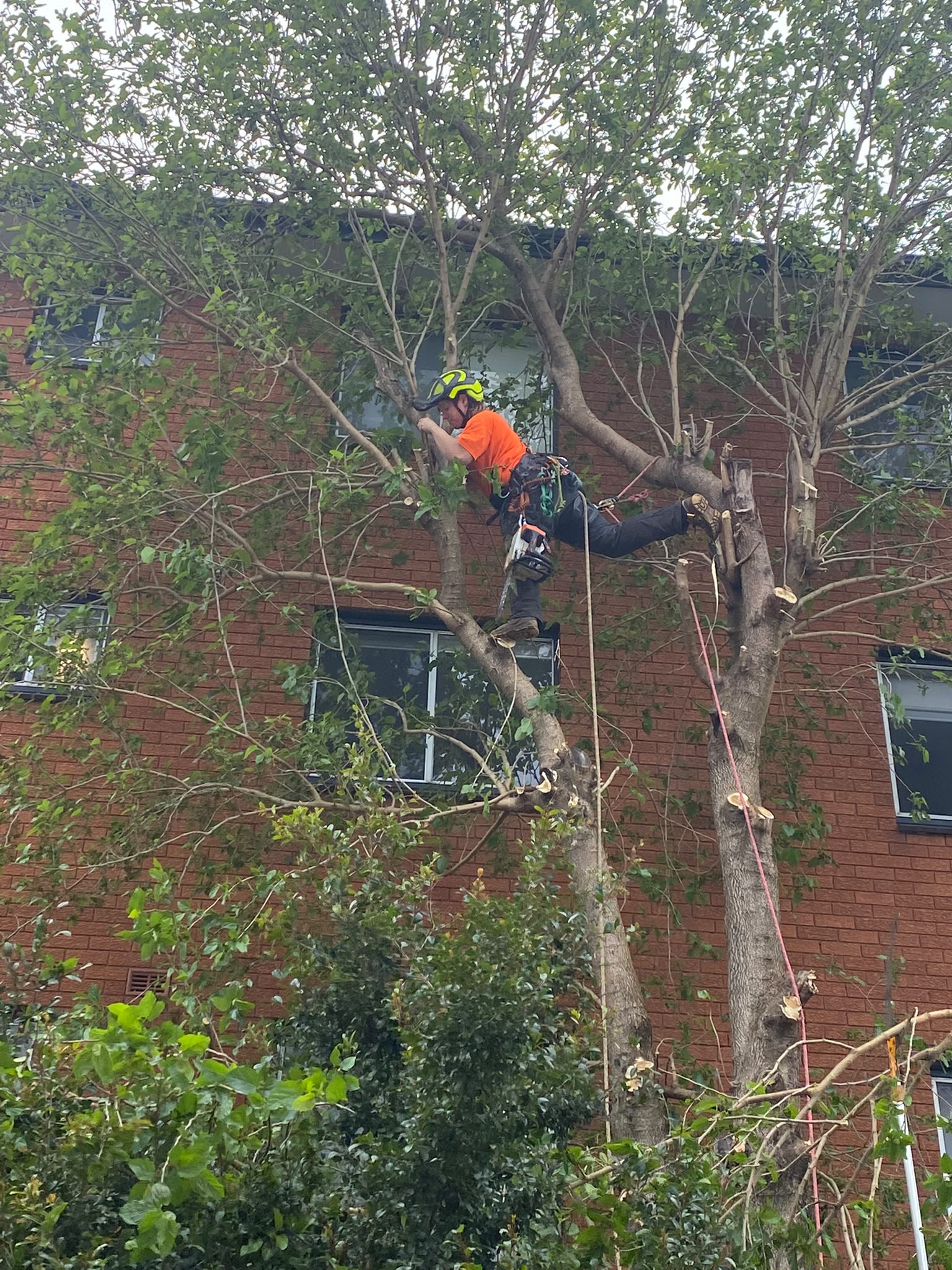
Rather than allowing branches to fall freely, arborists may need to dismantle the tree carefully, section by section.
What Is Tree Rigging?
Tree rigging involves using specialist ropes, pulleys and other equipment to control the movement and lowering of branches or sections of timber.
This technique can be necessary when there is insufficient space to safely lower material directly to the ground.
Rigging requires planning, suitable equipment and experienced workers.
The additional time and complexity can increase the cost of tree removal.
However, appropriate rigging can also help protect surrounding structures and manage the work safely.
5. When Is a Crane Required for Tree Removal?
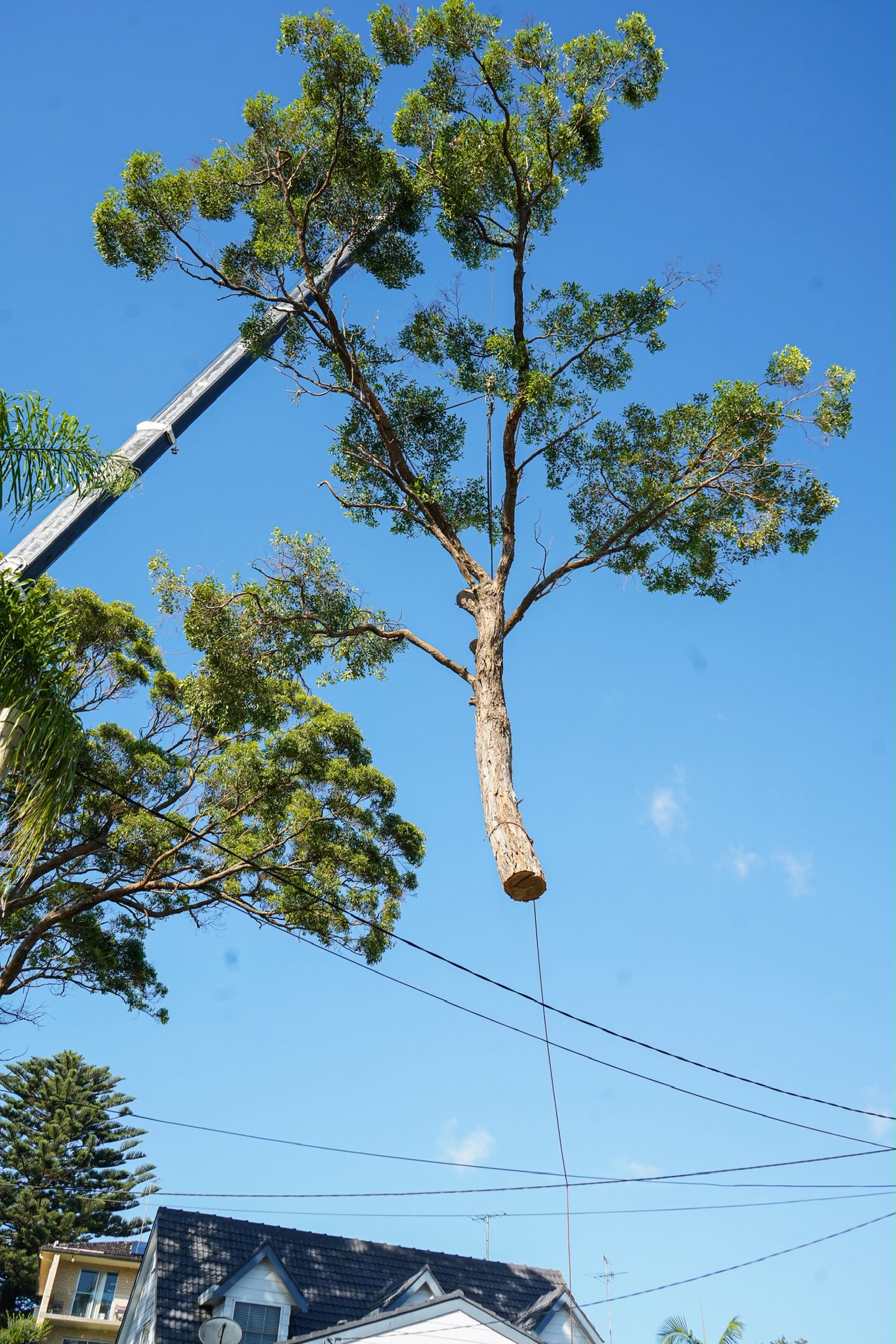
Some tree removals may benefit from the use of a crane.
Crane-assisted tree removal can be particularly useful when dealing with large trees, restricted access or difficult working conditions.
A crane may allow sections of a tree to be lifted and moved to a suitable processing area
However, cranes are not necessary for every large tree.
Their suitability depends on factors such as:
- Tree location and condition
- Available crane access
- Lifting distances
- Nearby structures
- Overhead services
- Ground conditions
- Equipment positioning
Crane hire adds a specialist equipment cost, but it can sometimes reduce the overall time required to complete a complex removal.
The most appropriate method should be determined through a site assessment.
6. What Are You Paying for When Hiring a Professional Arborist?
Tree removal involves considerably more than cutting down a tree.
A professional tree removal service may require a coordinated team, specialist equipment and careful planning.
Depending on the job, the quotation may include:
Qualified and Experienced Workers
Tree climbers and ground crew work together to dismantle trees and manage branches and timber.
Complex removals require technical knowledge, communication and experience.
Specialist Equipment
Professional tree removal can involve climbing equipment, rigging systems, chainsaws, wood chippers, trucks and other machinery. Equipment must be suitable for the work and maintained appropriately.
Insurance and Safety Procedures
Professional arborist businesses carry relevant insurance and operate with appropriate safety procedures. Homeowners should confirm that their chosen contractor has suitable insurance for the proposed work.
Waste Removal
Branches, leaves and timber often need to be processed, loaded, transported and disposed of.
The amount of green waste generated can significantly affect the time and cost involved.
Site Clean-Up
A detailed quotation should clarify whether general site clean-up and removal of tree debris are included. These services are part of the overall work and should be considered when comparing quotes.
Need an Accurate Tree Removal Quote?
Home Tree Services can assess the tree, access and work required before providing a detailed quotation.
7. Is Stump Grinding Included in the Tree Removal Price?
Not always.
Tree removal and stump grinding are generally treated as separate services.
When a tree is removed, the stump is often left close to ground level unless further work has been arranged.
Stump grinding involves using specialised machinery to grind the remaining stump below the surrounding ground level.
The cost depends on several factors, including:
- Stump diameter
- Tree species and wood density
- Access for the stump grinder
- Required grinding depth
- Nearby structures and underground services
- Whether the resulting grindings need to be removed
If you’re planning landscaping, new paving or garden improvements, it is worth discussing stump grinding before the tree removal begins.
Always check whether stump grinding is included in your quotation or priced separately.
8. Does Council Approval Affect Tree Removal Costs?
Depending on the property and tree, council approval may be required before removal.
Sydney councils have different tree protection rules, exemptions and application requirements.
For example, properties within Randwick, Waverley, Woollahra and Inner West Council areas may be subject to different controls.
Some trees may qualify for exemptions, while others require formal approval.
In certain circumstances, a report from an appropriately qualified consulting arborist may also be necessary.
These requirements can add time and additional expenses to the overall process.
Homeowners should confirm the relevant council requirements before arranging the removal of a protected tree.
A tree removal quotation should also clarify whether council applications or specialist reports are included.
9. Why Can Two Tree Removal Quotes Be So Different?
Receiving significantly different quotations for the same tree can be confusing.
However, the difference may not simply come down to the hourly rate charged by each business.
One contractor may have allowed for additional workers, specialist rigging equipment or a more time-consuming removal method.
Another quotation may exclude services such as stump grinding, waste removal or site clean-up.
When comparing tree removal quotes, consider:
- Is the full scope of work clearly described?
- Is all green waste being removed?
- Is stump grinding included?
- Does the contractor have suitable insurance?
- Are the workers appropriately trained and experienced?
- Are there additional charges for access or equipment?
- Is GST included in the quoted price?
The cheapest quotation is not necessarily the best value if it excludes important services or does not adequately account for the complexity of the work.
A clear, detailed quotation helps homeowners understand exactly what they are paying for.
10. Three Examples of How Tree Removal Costs Can Vary
Generally, larger trees require more time, labour and equipment to remove.
However, height alone does not determine the cost.
Example 1: Small Tree With Easy Access
A relatively small tree is growing in an open front yard. There are no buildings or fences directly beneath the canopy, and the truck and wood chipper can be positioned nearby. The removal process is relatively straightforward, with efficient access for processing and removing the waste. This type of job will generally be less labour-intensive than a removal involving restricted access or complex rigging.
Example 2: Medium Tree Overhanging a House
A medium-sized tree is growing in a backyard, with branches extending over the roof and neighbouring fence. Access is limited to a narrow side passage. The tree may need to be dismantled carefully using climbing and rigging techniques. Branches and timber may also need to be carried manually to the truck. Although the tree is not particularly large, the additional labour and complexity can increase the cost.
Example 3: Large Tree Requiring Specialist Equipment
A mature tree is growing close to a house, with limited space for conventional dismantling. A crane may be considered to assist with lifting and removing large sections. This type of job requires additional planning, equipment and coordination. Although specialist equipment increases certain costs, it may also improve efficiency and reduce the time required on site. These examples demonstrate why an accurate tree removal quotation should be based on the specific tree and property conditions.
11. Can Tree Pruning Be a More Affordable Alternative to Removal?
Sometimes homeowners consider removing a tree because its branches are growing too close to the house, blocking sunlight or extending over neighbouring properties.
However, complete removal is not always necessary.
Depending on the species, condition and structure of the tree, professional pruning may offer a suitable alternative.
Possible options include:
- Selective branch reduction
- Building clearance
- Deadwood removal
- Canopy lifting
- Appropriate structural pruning
Pruning may help manage certain problems while preserving a healthy, established tree.
However, excessive pruning can create additional problems and should be avoided.
The most suitable approach depends on the tree’s condition, the homeowner’s objectives and applicable council regulations.
12. Tree Removal in Sydney’s Eastern Suburbs and Inner West
Tree removal requirements vary considerably across Sydney’s established residential areas.
In the Eastern Suburbs, including Maroubra, Randwick, Coogee, Bondi, Clovelly, Bellevue Hill, Rose Bay and Vaucluse, trees often grow close to houses, retaining walls and neighbouring properties.
Access restrictions and limited space can make removal more complicated.
Similarly, properties throughout the Inner West, including Balmain, Marrickville, Petersham, Stanmore, Leichhardt and Ashfield, frequently have mature trees in established gardens with restricted access.
In these environments, professional planning and appropriate equipment are important considerations.
Home Tree Services provides tree removal, professional pruning and stump grinding services throughout Sydney’s Eastern Suburbs and Inner West.
13. How Can You Get an Accurate Tree Removal Quote?
The most reliable way to understand the cost of removing a tree is to arrange a professional site assessment.
An arborist can examine the tree, evaluate access, identify potential complications and determine the equipment and labour required.
This allows the quotation to reflect the actual work involved rather than relying on a general estimate based on tree height.
At Home Tree Services, we aim to provide clear quotations and practical recommendations based on the condition of the tree and the requirements of each property.
Whether the job involves a small backyard tree or a complex removal near a building, understanding the work involved is the first step towards making an informed decision.
Home Tree Services
Your Safe Choice for All Tree Services.
Frequently Asked Questions
Tree removal costs depend on the tree’s size, condition, location, access and the equipment required. Small, accessible trees are generally less expensive to remove than large trees requiring specialist rigging or machinery. A site assessment is the most reliable way to obtain an accurate quotation.
Professional tree removal can involve qualified workers, climbing and rigging equipment, trucks, wood chippers, insurance, waste disposal and site clean-up. Complex removals may also require specialist machinery or additional labour.
Not necessarily. Stump grinding is often quoted separately because the equipment and work involved differ from tree removal. Always confirm whether stump grinding is included.
Some trees may qualify for exemptions, but requirements vary between councils. Protected trees may require approval before removal. Check the current regulations for your property before proceeding.
Pruning can sometimes be a more affordable option when the main concern involves overhanging branches, building clearance or deadwood. However, the appropriate solution depends on the tree’s condition and the work required.