

Tree Pruning and Strong Winds in Sydney: How Regular Pruning Can Help Keep Your Property Safe
Strong winds are a normal part of Sydney weather, but when you have large or mature trees around your home, windy conditions can quickly highlight problems that may have been developing for years.
Dead branches, damaged limbs, excessive canopy weight and branches growing over roofs, driveways or neighbouring properties can all become more concerning when strong winds arrive.
Regular tree inspection and professional pruning can help identify these problems early and reduce some of the risks associated with falling branches.
At Home Tree Services, we regularly prune trees across Sydney’s Eastern Suburbs and Inner West, including Maroubra, Coogee, Randwick, Bondi, Marrickville, Lewisham, Petersham, Stanmore and Balmain.
For us, good tree pruning isn’t simply about making a tree look neat. Safety, tree health and appropriate clearance should always come first.

Why Can Strong Winds Be a Problem for Trees?
A healthy tree is naturally designed to move in the wind. Branches and foliage move, bend and respond to changing wind loads.
However, not every tree is structurally the same.
Deadwood, damaged branches, previous poor pruning, heavy or extended limbs, structural defects and changes around the tree can potentially increase the risk of branch failure.
The location of the tree is also important.
A branch over an open garden presents a very different situation from a similar branch positioned directly above a house, driveway, footpath, children’s play area or neighbouring property.
This is why tree safety isn’t only about asking, “Is this tree healthy?”
We also need to consider what could be affected if a branch fails.
Can Tree Pruning Help Reduce Wind Load?
What Is Canopy Thinning?
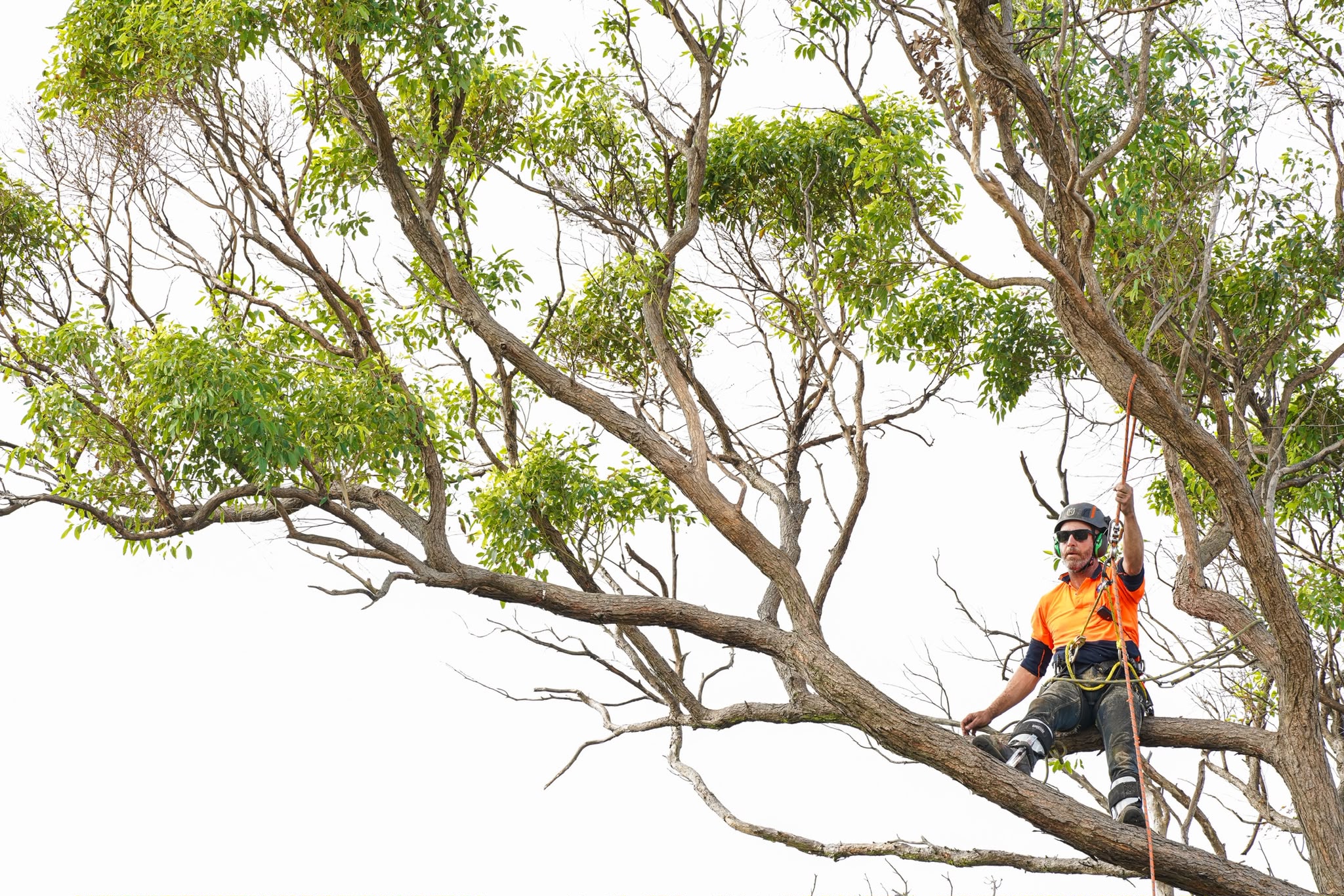
Canopy thinning is the selective removal of branches from within a tree’s crown.
The aim is generally to reduce canopy density while maintaining a balanced and natural tree structure.
Done correctly, canopy thinning can improve light penetration and selectively reduce foliage and branch mass without unnecessarily removing major sections of the tree.
For properties exposed to strong winds, however, thinning is only one possible pruning technique. Depending on the tree, selective branch reduction, deadwood removal or other structural pruning may be more appropriate.
A qualified arborist should assess the tree before deciding what work is required.
Deadwood Removal Is Particularly Important Around Homes
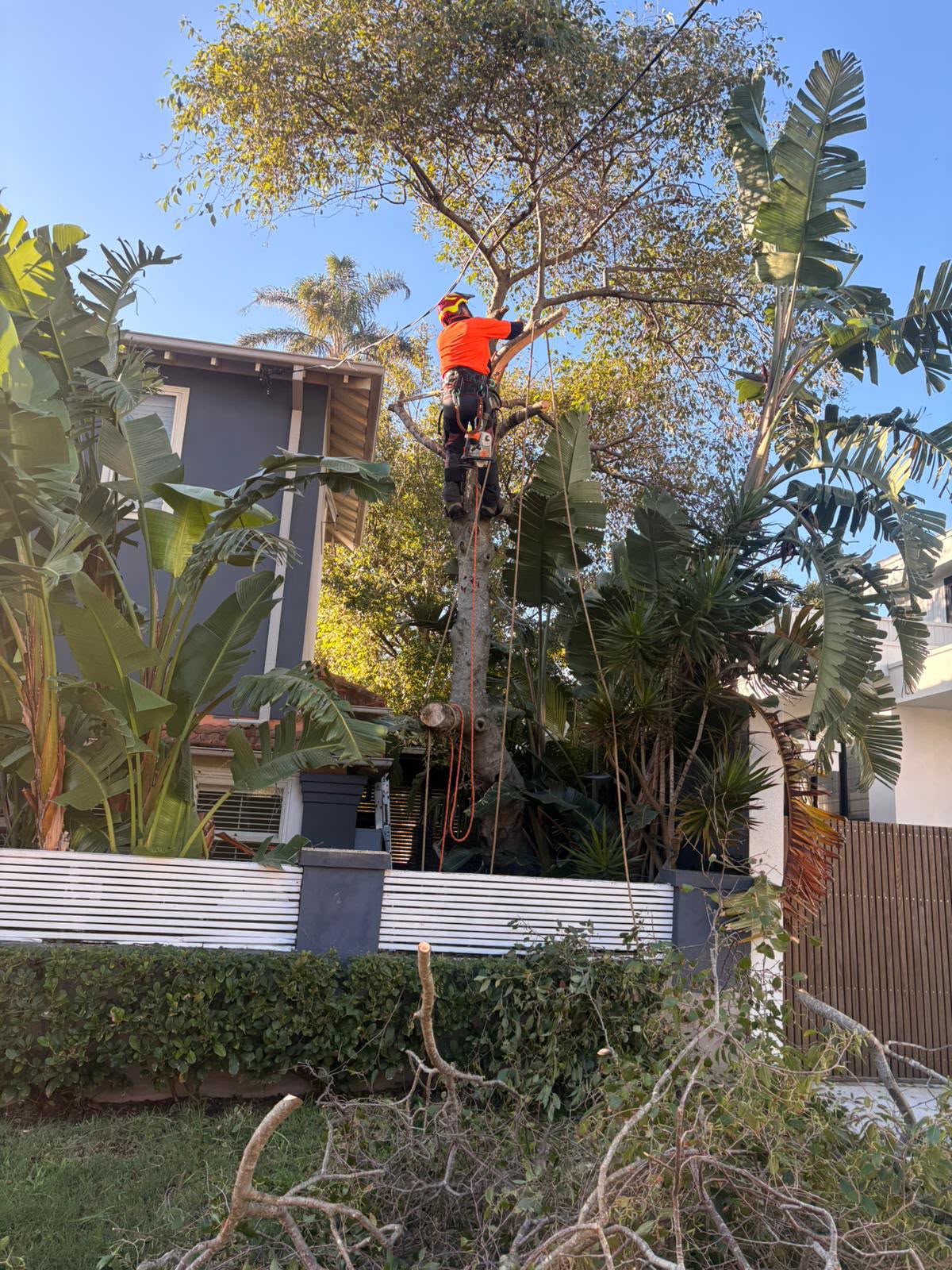
One of the first things we look for when inspecting a large tree is deadwood.
Dead branches no longer have the same living structural characteristics as healthy branches and can eventually break away from the tree.
This becomes particularly important when deadwood is located over:
- houses and roofs
- driveways and parked vehicles
- footpaths and entrances
- entertaining areas
- swimming pools
- neighbouring properties
Strong wind can expose an existing weakness very quickly.
Removing significant deadwood before it falls is therefore an important part of preventative tree maintenance, particularly on large trees growing close to homes.
What About Trees Growing Over the Roof?
How Often Should Trees Be Pruned?
There isn’t one pruning schedule that is correct for every tree.
A tree does not necessarily need to be pruned every year.
How frequently pruning is required depends on factors including:
- tree species and age
- size and structure
- previous pruning
- amount of deadwood
- proximity to buildings
- exposure to wind
- branch growth over neighbouring properties
- changes in the surrounding environment
For larger trees around houses and frequently used areas, regular visual inspections are sensible. An additional inspection can also be worthwhile following unusually severe weather if you notice broken branches, hanging limbs, cracks or other changes.
The important distinction is between inspection and pruning.
A tree may benefit from being checked regularly without requiring significant pruning every year.
More Pruning Doesn’t Always Mean a Safer Tree
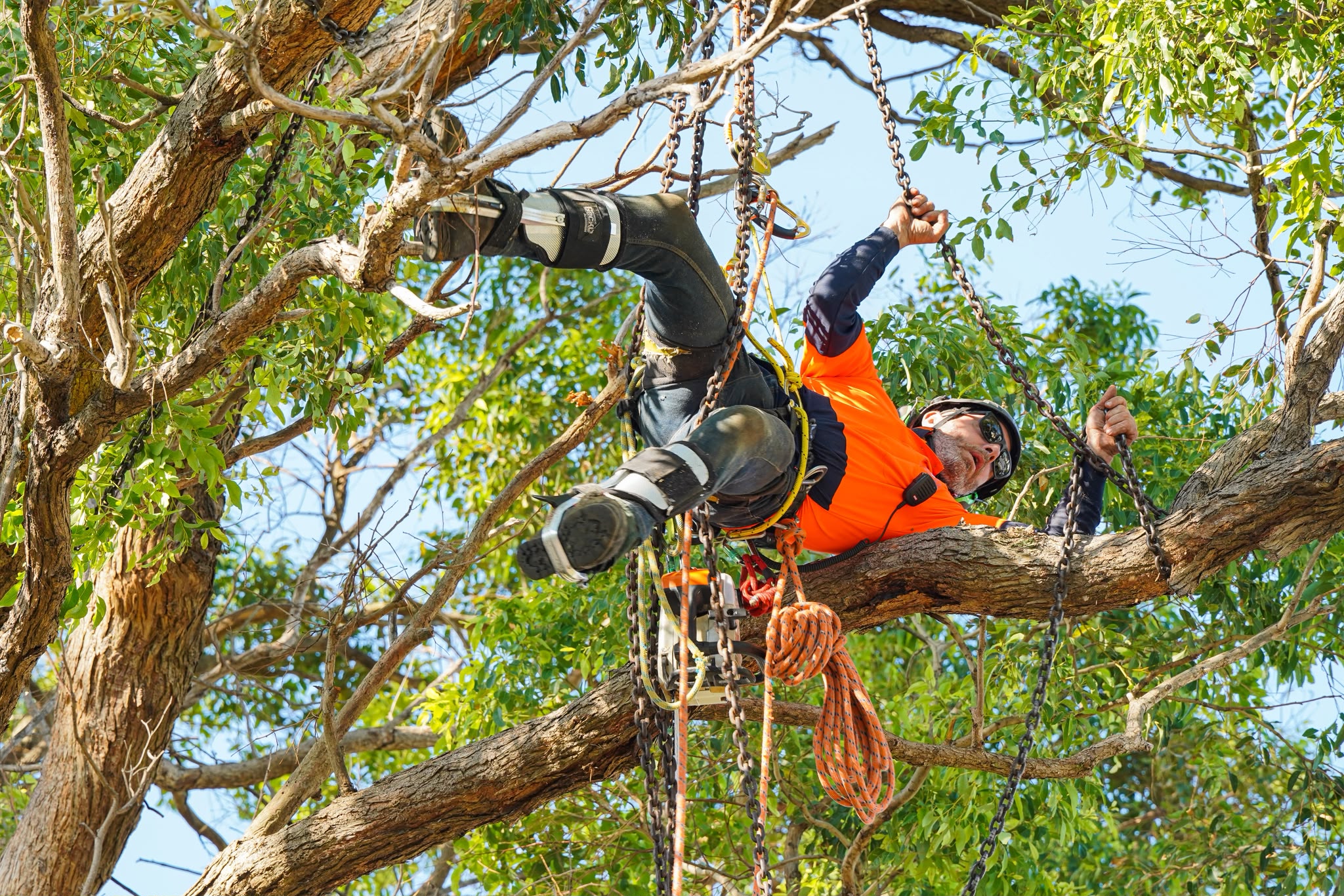
Removing too much foliage or incorrectly cutting major branches can negatively affect a tree.
Aggressive topping or poor pruning can stimulate undesirable regrowth and may create future structural problems. Research into some forms of severe pruning has found weaker subsequent growth and increased decay associated with certain pruning cuts. (Isa Arbor)
Professional tree pruning should therefore aim to achieve a specific objective with an appropriate amount of pruning.
Sometimes that objective is deadwood removal.
Sometimes it is building clearance.
Sometimes a particular limb needs weight reduction.
And sometimes the best recommendation is simply to leave the tree alone.
Signs Your Tree May Need an Inspection Before the Next Period of Strong Winds
Consider having your tree inspected if you notice:
- large dead branches within the canopy
- broken or hanging branches
- branches overhanging your house or frequently used areas
- unusually heavy or extended limbs
- branches touching or growing towards the roof
- recent branch failures
- visible cracks or damaged branch unions
- significant changes to the tree or surrounding ground
You don’t need to wait for a storm warning before checking your trees.
Preventative maintenance gives an arborist the opportunity to inspect and complete appropriate work under normal conditions rather than waiting until a damaged branch becomes an emergency.
Tree Pruning Across Sydney’s Eastern Suburbs and Inner West
Home Tree Services provides professional tree pruning, deadwood removal, canopy management and building clearance across Sydney.
Our team regularly works throughout Maroubra, Coogee, Randwick, Bondi, Bronte, Clovelly, Matraville, Little Bay, Malabar, Rose Bay, Dover Heights and Vaucluse, as well as Inner West suburbs including Marrickville, Petersham, Lewisham, Stanmore, Balmain and surrounding areas.
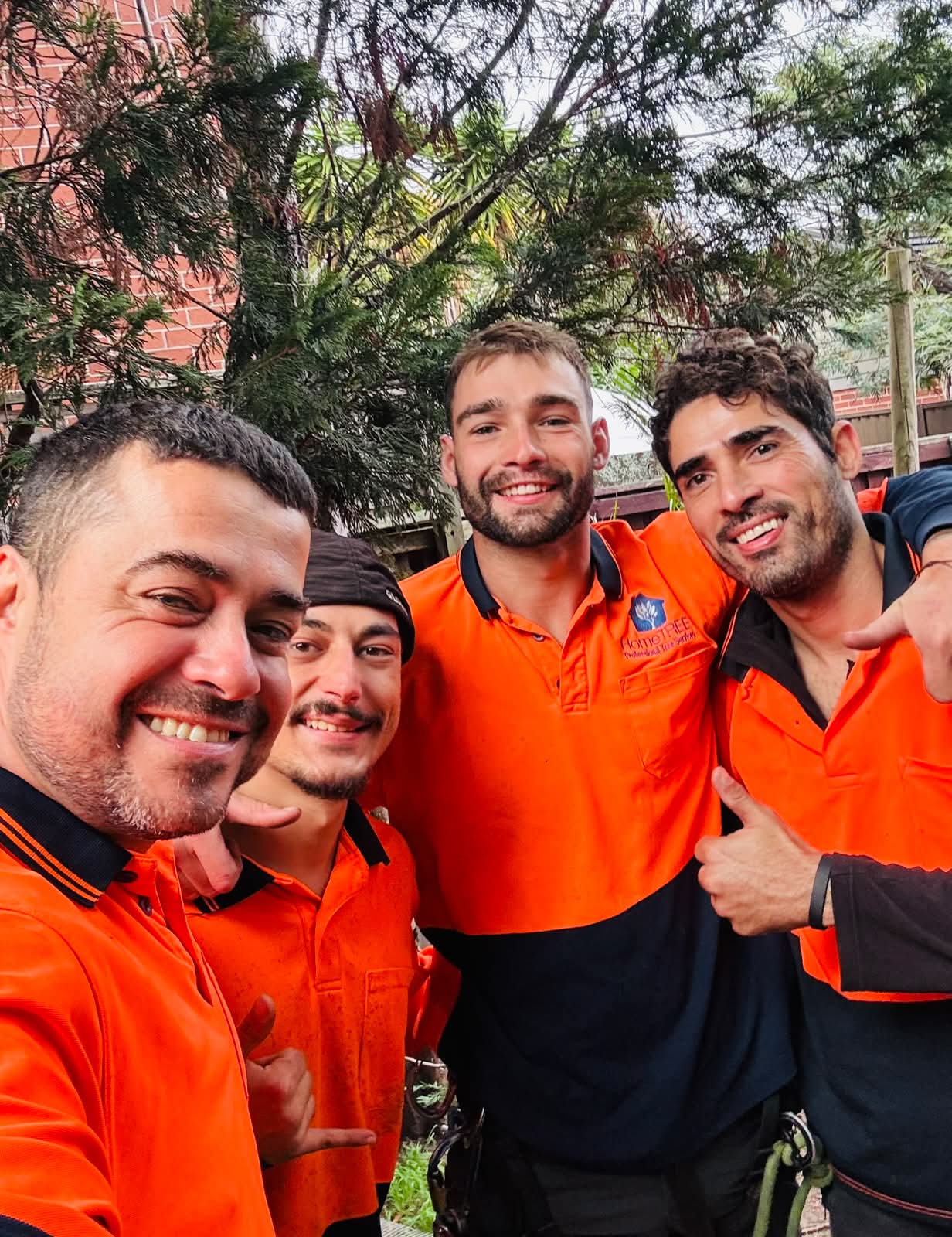
We are qualified arborists, fully insured, and tree works are carried out with local council requirements in mind.
If you have a large tree close to your home and are concerned about deadwood, overhanging branches or how the tree may respond during strong winds, a professional inspection can help determine whether pruning is actually required.
Concerned About a Tree Near Your Home?
An arborist can often help before a neighbour tree issue becomes a dispute.
A professional assessment can identify:
Contact our qualified arborists to arrange a site inspection and quote.
Frequently Asked Questions
No tree can be guaranteed to be completely safe during severe weather. Appropriate pruning can address identifiable issues such as deadwood, damaged limbs, excessive branch length or particular structural concerns, and some pruning techniques can reduce wind loading. However, pruning cannot eliminate all risk.
Not necessarily. Pruning frequency depends on the species, size, condition, location and structure of the individual tree. Regular inspection is different from automatically pruning a tree every year.
Selective canopy thinning can reduce foliage and branch mass and may reduce wind loading, but it is not appropriate as a blanket treatment for every tree. Other techniques, such as selective reduction, may sometimes be more suitable. The correct approach depends on the individual tree. (Isa Arbor)
Significant deadwood located above houses, driveways, pathways or other frequently used areas should be assessed. Removing hazardous deadwood is an important part of managing tree-related risk around a property.
Often, yes, but the work should take the tree’s health, structure and applicable local council regulations into consideration. Appropriate building clearance can often be achieved without unnecessarily removing large sections of the canopy.
Tree pruning rules vary between councils and can depend on the species, size, location and extent of the proposed work. Requirements should be checked for the relevant local council before regulated tree work is undertaken.