

Why Is My Tree Dropping Branches? Signs You Shouldn’t Ignore
Have you ever walked into your backyard and discovered a large branch lying on the ground, even though there was no obvious storm or strong wind?
It can be surprising, especially when the tree appears perfectly healthy.
Falling branches are a common concern for homeowners across Sydney, particularly in established suburbs where mature eucalyptus trees and other large species grow close to houses, driveways, gardens and neighbouring properties.
But why do trees drop branches?
The answer isn’t always straightforward. Some branches fall because they are dead or decaying, while others fail due to structural weaknesses, weather conditions or natural processes.
Understanding the possible causes can help homeowners recognise warning signs and make informed decisions about tree maintenance.

1. Why Do Trees Drop Branches?
Trees can lose branches for several reasons, and not every fallen branch means the entire tree is unhealthy.
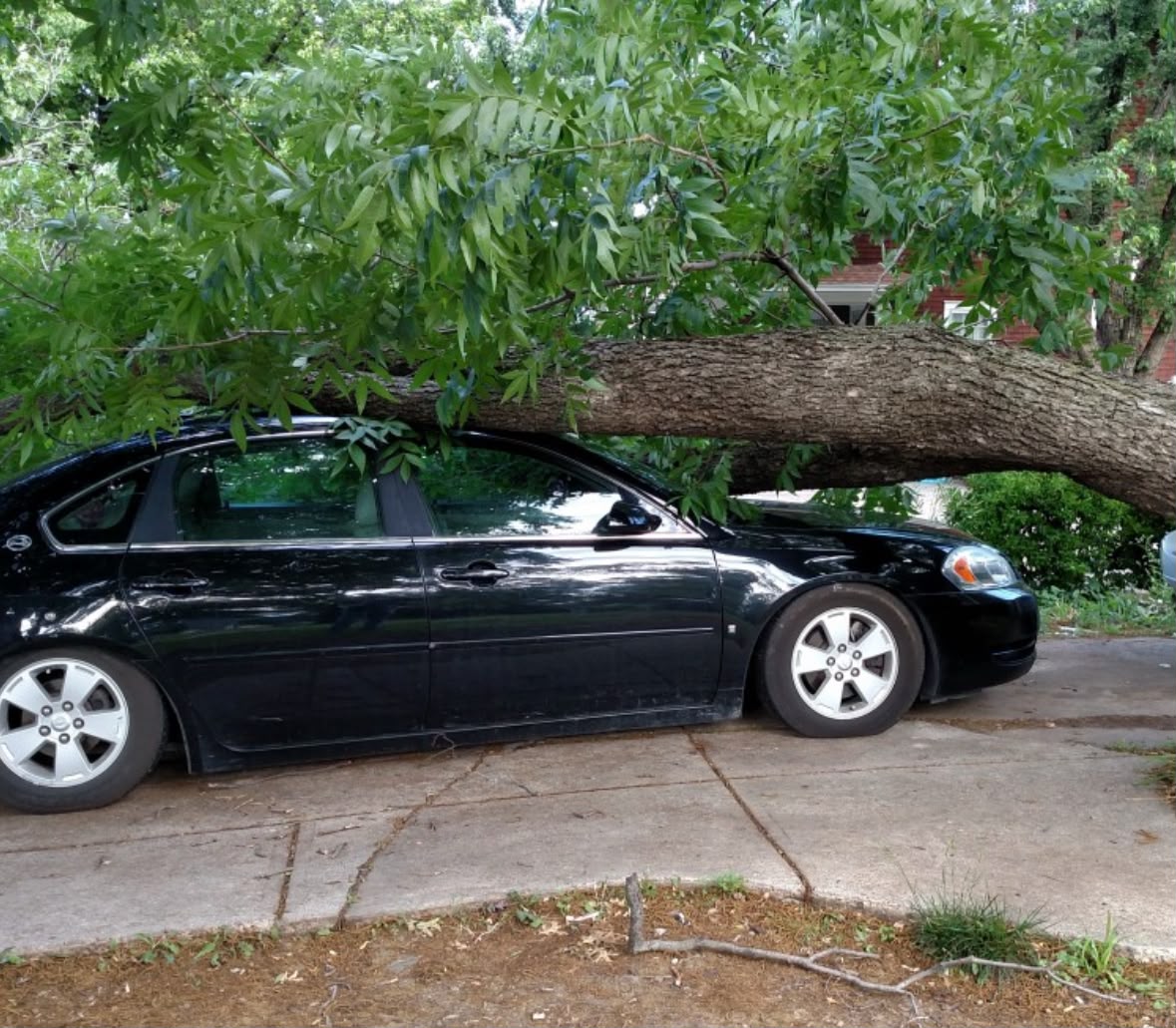
Deadwood and Natural Branch Shedding
As trees grow, some branches become shaded by the surrounding canopy and gradually die.
Over time, these dead branches can dry out, weaken and eventually fall.
This is a natural process in many tree species.
However, deadwood becomes a potential hazard when branches are positioned above frequently used areas such as:
- Houses and roofs
- Driveways
- Swimming pools
- Children’s play areas
- Outdoor entertaining spaces
- Footpaths and pedestrian access
Professional deadwood removal can help manage this particular risk while retaining the healthy parts of the tree.
Structural Weaknesses
Some branches develop structural defects that make them more susceptible to failure.
These may include:
- Cracks or splits in major limbs
- Weak branch unions
- Included bark between competing stems
- Previous storm damage
- Internal decay
- Poorly formed branch attachments
These defects are not always obvious from the ground.
An arborist can inspect the visible structure of the tree and recommend whether further assessment or remedial pruning is appropriate.
Weather Conditions
Strong winds, storms and heavy rain can place significant loads on branches.
Large limbs may fail when wind forces exceed their structural capacity.
However, branches can also fall during relatively calm weather.
This is why a tree should not automatically be considered safe simply because it survived the last storm.
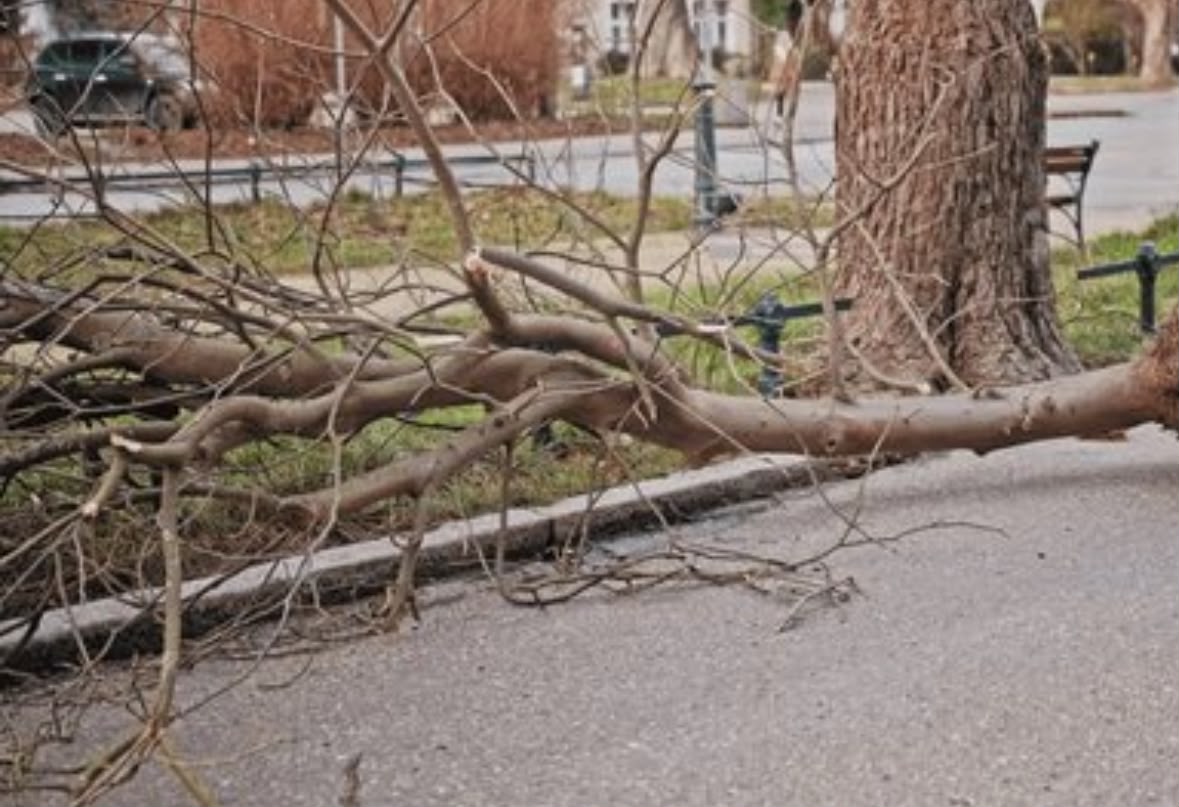
2. Why Do Eucalyptus Trees Sometimes Drop Branches?
Eucalyptus trees, commonly known as gum trees, are an important part of Sydney’s natural landscape.
They provide shade, habitat and environmental benefits, and many mature specimens are valuable features of residential properties.
However, some eucalyptus species can occasionally experience branch failure, including the failure of apparently healthy limbs.
This is sometimes described as sudden limb failure.
The exact cause of an individual branch failure is not always identifiable.
Potential contributing factors can include branch structure, internal defects, environmental conditions and mechanical loading.
It is important to understand that not all eucalyptus trees are dangerous, and branch failure is not exclusive to gum trees.
A healthy-looking eucalyptus may still have defects that require attention, but the presence of a mature gum tree alone is not a reason for removal.
Regular observation and appropriate professional assessment can help identify some potential hazards.
3. Can a Healthy Tree Drop a Branch Without Warning?
Yes.
Although dead branches and structural defects account for many branch failures, apparently healthy branches can sometimes fall without obvious external warning signs.
This is particularly concerning when large limbs extend above houses, driveways or areas where people regularly spend time.
Some defects may be hidden within the branch or its attachment to the trunk.
Even a professional inspection cannot guarantee that every future branch failure will be predicted.
The goal of tree risk management is therefore to identify and manage reasonably foreseeable hazards, rather than promise that a tree will never lose a branch.
4. Warning Signs That Your Tree May Need Attention
Trees can lose branches for several reasons, and not every fallen branch means the entire tree is unhealthy.
Large Dead Branches
Dead branches may have missing foliage, brittle twigs or deteriorating bark.
Large dead branches above frequently used areas deserve particular attention.
Cracks or Splits
Visible cracks in major limbs or where branches connect to the trunk can indicate structural problems.
Fresh cracks following a storm should be treated seriously.
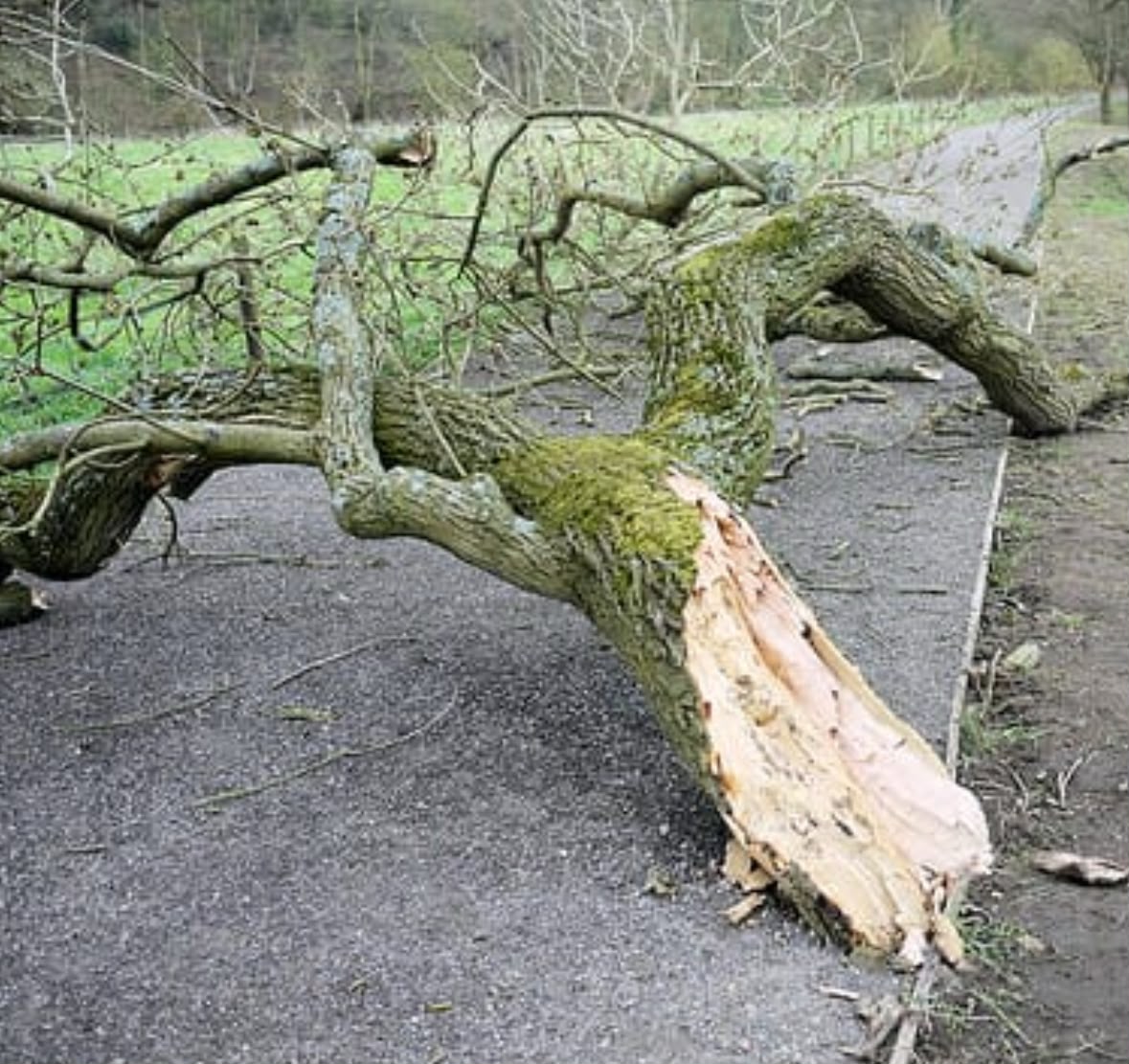
Hanging or Broken Branches
A branch that has partially broken but remains caught in the canopy can be particularly dangerous.
These branches may fall unexpectedly.
Never attempt to pull down a large hanging branch yourself.
Fungal Growth and Decay
Dead branches may have missing foliage, brittle twigs or deteriorating bark.
Large dead branches above frequently used areas deserve particular attention.
Previous Large Branch Failures
Visible cracks in major limbs or where branches connect to the trunk can indicate structural problems.
Fresh cracks following a storm should be treated seriously.
Changes in Tree Structure
Dead branches may have missing foliage, brittle twigs or deteriorating bark.
Large dead branches above frequently used areas deserve particular attention.
5. Can Tree Pruning Help Prevent Falling Branches?
Appropriate pruning can help manage certain tree-related risks.
However, the type and amount of pruning should be based on the condition, species and structure of the individual tree.
Deadwood Removal
Removing dead branches is one of the most common forms of preventative tree maintenance. This can reduce the risk associated with identified deadwood above houses, driveways, footpaths and outdoor areas.
Selective Branch Reduction
Where a particular limb presents an identifiable concern, selective reduction may help reduce the mechanical load on that branch. This must be carried out carefully to avoid creating additional structural problems.
Canopy Management
In some circumstances, selective canopy pruning can help address particular structural concerns or reduce loading on selected limbs.
However, indiscriminate canopy thinning is not a reliable way to make every tree safer.
Excessive pruning can stress trees, encourage poorly attached regrowth and create future maintenance problems.
Removing Hazardous Branches
Sometimes an individual branch may need to be removed completely. In other situations, retaining the branch with appropriate reduction may be preferable. The correct approach depends on the tree and the specific defect being managed. Important: Professional pruning can reduce certain identified risks, but it cannot eliminate every possibility of future branch failure.
6. Warning Signs That Your Tree May Need Attention
Trees can lose branches for several reasons, and not every fallen branch means the entire tree is unhealthy.
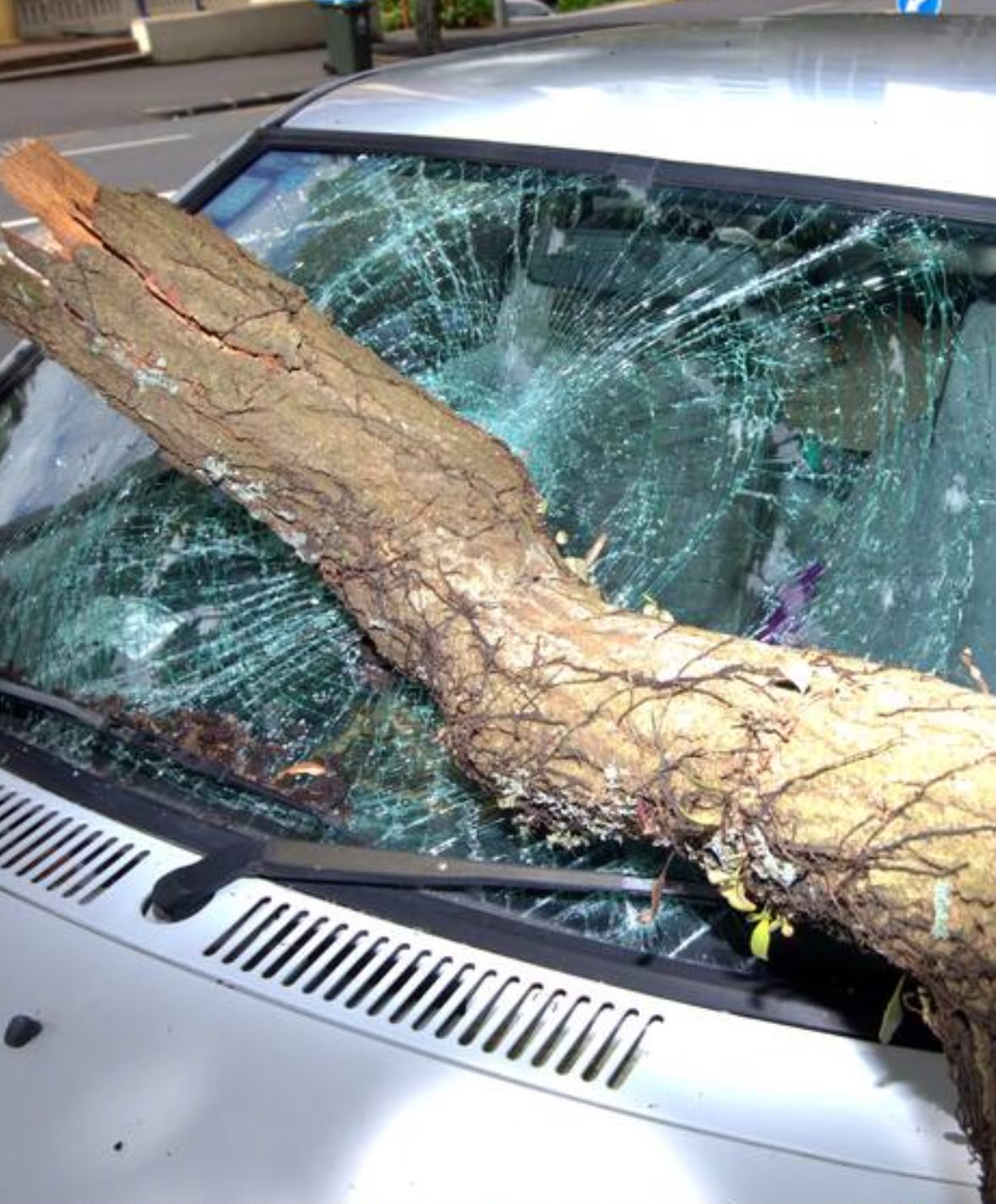
Keep People Away
Avoid walking beneath the affected canopy until you have checked for additional broken or hanging branches.
Look for Additional Damage
From a safe distance, check whether other branches appear damaged or unstable.
Do not stand underneath the tree to inspect it.
Avoid DIY Removal of Large Branches
Large fallen branches can remain under considerable tension.
Cutting them incorrectly can cause sudden movement, especially when branches are trapped against fences, buildings or other trees.
Arrange a Professional Assessment
An arborist can assess the visible damage and determine whether further pruning, hazard removal or additional investigation is appropriate.
If the tree has suffered major structural damage, a more detailed assessment by an appropriately qualified consulting arborist may be necessary.
If there is immediate danger to people or property, keep the area clear and contact the appropriate emergency service.
7. Does a Tree Need to Be Removed After Dropping a Large Branch?
Not necessarily.
A single branch failure does not automatically mean the entire tree needs to be removed.
In some cases, the tree may remain structurally sound and only require selective pruning or removal of damaged material.
However, removal may need to be considered where there are serious structural defects, extensive decay or an unacceptable level of risk that cannot reasonably be managed through other measures.
The decision should be based on the condition of the entire tree, its surroundings and the available management options.
Where a formal tree risk assessment or arboricultural report is required, this should be undertaken by an appropriately qualified consulting arborist.
8. Do You Need Council Approval to Remove Dangerous Branches in Sydney?
Council requirements vary depending on the property, tree and proposed work.
In Sydney, protected trees may require approval before significant pruning or removal.
This applies even when the homeowner is concerned about falling branches.
Different councils, including Randwick, Waverley, Woollahra and Inner West, have their own tree protection controls, exemptions and procedures for dangerous trees.
Some limited pruning may qualify as exempt work, while more substantial work can require council consent.
Emergency provisions may apply where there is an immediate and demonstrable danger, but these should not be confused with ordinary maintenance exemptions.
For this reason, homeowners should check the current requirements of their local council before carrying out significant tree work.
Where council approval or a formal arborist report is required, the appropriate process should be followed.
9. Tree Safety and Deadwood Removal in Sydney’s Eastern Suburbs
Sydney’s Eastern Suburbs contain many established residential properties with mature trees growing close to buildings and outdoor living spaces.
In suburbs such as Maroubra, Coogee, Randwick, Clovelly, Bondi, Bellevue Hill, Rose Bay, Vaucluse and Matraville, large trees can provide valuable shade and character.
However, branches extending over houses, driveways and outdoor areas may require periodic inspection and maintenance.
Professional deadwood removal and selective pruning can help manage identifiable hazards while preserving healthy trees wherever practical.
10. Tree Pruning and Falling Branches in Sydney’s Inner West
Mature trees are also a familiar feature of Sydney’s Inner West.
Properties in Marrickville, Petersham, Stanmore, Lewisham, Balmain, Leichhardt and Ashfield often have established trees growing close to houses, neighbouring properties and shared boundaries.
In these environments, careful tree maintenance can be particularly important.
The objective should be to manage identifiable risks without unnecessarily removing valuable mature trees.
11. When Should You Contact an Arborist?
Consider arranging a professional tree inspection if you notice:
- Large dead branches above frequently used areas
- Fresh cracks or splits in major limbs
- Broken branches hanging in the canopy
- Repeated large branch failures
- Signs of significant decay
- Sudden changes in the tree’s structure
- Storm damage affecting major limbs
An arborist can assess the visible condition of the tree, identify appropriate maintenance work and advise when a more detailed specialist assessment may be necessary.
At Home Tree Services, we provide professional tree pruning, deadwood removal and hazardous branch removal throughout Sydney’s Eastern Suburbs and Inner West.
Our focus is on practical tree maintenance, safe work practices and retaining healthy trees wherever appropriate.
Home Tree Services
Your Safe Choice for All Tree Services.
Frequently Asked Questions
Trees can drop branches because of deadwood, decay, structural weaknesses, storms or natural branch shedding. Occasionally, apparently healthy branches can also fail without obvious warning signs.
Yes. Some eucalyptus trees can experience branch failure even when the affected limb appears healthy. However, not all eucalyptus trees are dangerous, and the risk depends on the individual tree and its circumstances.
Professional pruning can help manage risks associated with identified deadwood, damaged limbs and certain structural defects. However, no pruning method can guarantee that branches will never fall.
Possibly. Requirements vary between Sydney councils and depend on the tree, proposed pruning and applicable exemptions. Always check the relevant council rules before significant work.