

Trees Overhanging Your Swimming Pool? Here’s What You Can Do
A beautiful mature tree can add shade, privacy and character to a backyard — but when its canopy starts growing directly over a swimming pool, it can also create a lot of extra maintenance.
Leaves, flowers, berries, seeds and small branches can continually fall into the water. A dense canopy can block sunlight, and overhanging branches can make the entire pool area feel darker and less inviting.
This is a common problem we see at properties throughout Sydney’s Eastern Suburbs and Inner West.
The good news is that removing the tree is not always necessary.
In many situations, careful tree pruning can reduce the amount of canopy over the pool, improve sunlight and make ongoing pool maintenance considerably easier while retaining a healthy tree.

Why Are Overhanging Trees a Problem Around Swimming Pools?
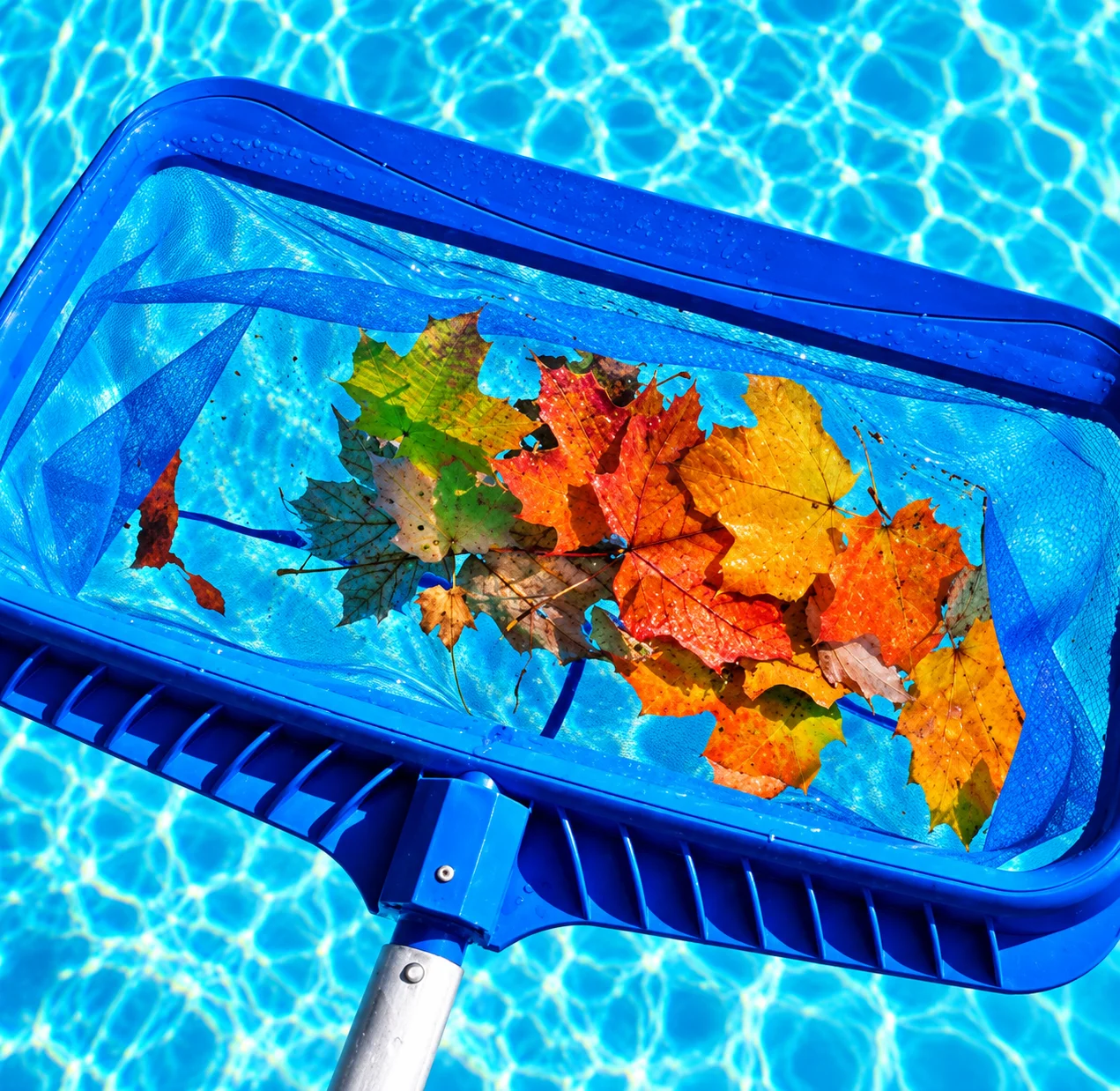
Some leaf litter around an outdoor swimming pool is unavoidable.
The problem begins when a substantial part of a tree canopy extends directly above the pool.
Depending on the tree species and season, this can result in a regular build-up of:
- Leaves
- Flowers
- Berries and fruit
- Seeds and seed pods
- Bark
- Small twigs and branches
- Bird debris associated with the tree
All of this material eventually needs to be removed.
Large amounts of organic debris can fill skimmer baskets and increase the workload on pool filtration and cleaning systems. It also means more time spent manually cleaning the pool and surrounding areas.
Reducing the amount of canopy directly above the water can help reduce this ongoing maintenance.
What Can Be Done About a Tree Overhanging a Pool?
A qualified arborist should look at the species, size, structure and position of the tree before deciding how it should be pruned.
However, there are several techniques that can often help.
1. Selective Pool Clearance Pruning
Selected branches growing directly towards or over the swimming pool can sometimes be reduced back to suitable growth points. The objective is not necessarily to create a completely empty space above the pool. Instead, the arborist can selectively redirect the canopy away from the pool while maintaining the natural structure and balance of the tree.
2. Canopy Thinning
Where appropriate, selective canopy thinning can reduce canopy density. This can allow more filtered sunlight through the tree while retaining its overall size and character. It can also reduce the concentration of foliage directly above the swimming pool. Canopy thinning needs to be carried out carefully. Excessive thinning or indiscriminate removal of branches can negatively affect the tree’s health, structure and appearance.
3. Reducing Selected Branches
Sometimes the problem comes from only one section of the tree. Rather than pruning the entire canopy, selected limbs extending towards the swimming pool may be reduced. This targeted approach can be particularly useful where the rest of the tree is providing valuable privacy or shade.
4. Regular Tree Maintenance
For fast-growing trees, one pruning visit may not provide a permanent solution. A maintenance program can keep regrowth under control before the canopy becomes heavily established above the pool again. How frequently a tree requires pruning depends on its species, age, condition, growth rate and the amount of clearance required.
My Tree Is Blocking Sunlight From the Pool – Can Pruning Help?
Yes, in appropriate circumstances.
A dense tree canopy can substantially reduce the amount of sunlight reaching a swimming pool and surrounding entertaining area.
For some homeowners, this becomes particularly noticeable when a tree has grown considerably larger than when the pool or landscaping was originally designed.
Selective canopy thinning can sometimes allow considerably more filtered light through the tree without requiring its removal.
The objective should not be to excessively prune the tree simply to maximise sunlight.
Instead, professional pruning should aim for a sensible balance between additional light, pool usability and maintaining a healthy, structurally sound tree.
Should I Remove a Tree Because It Drops Leaves Into My Pool?
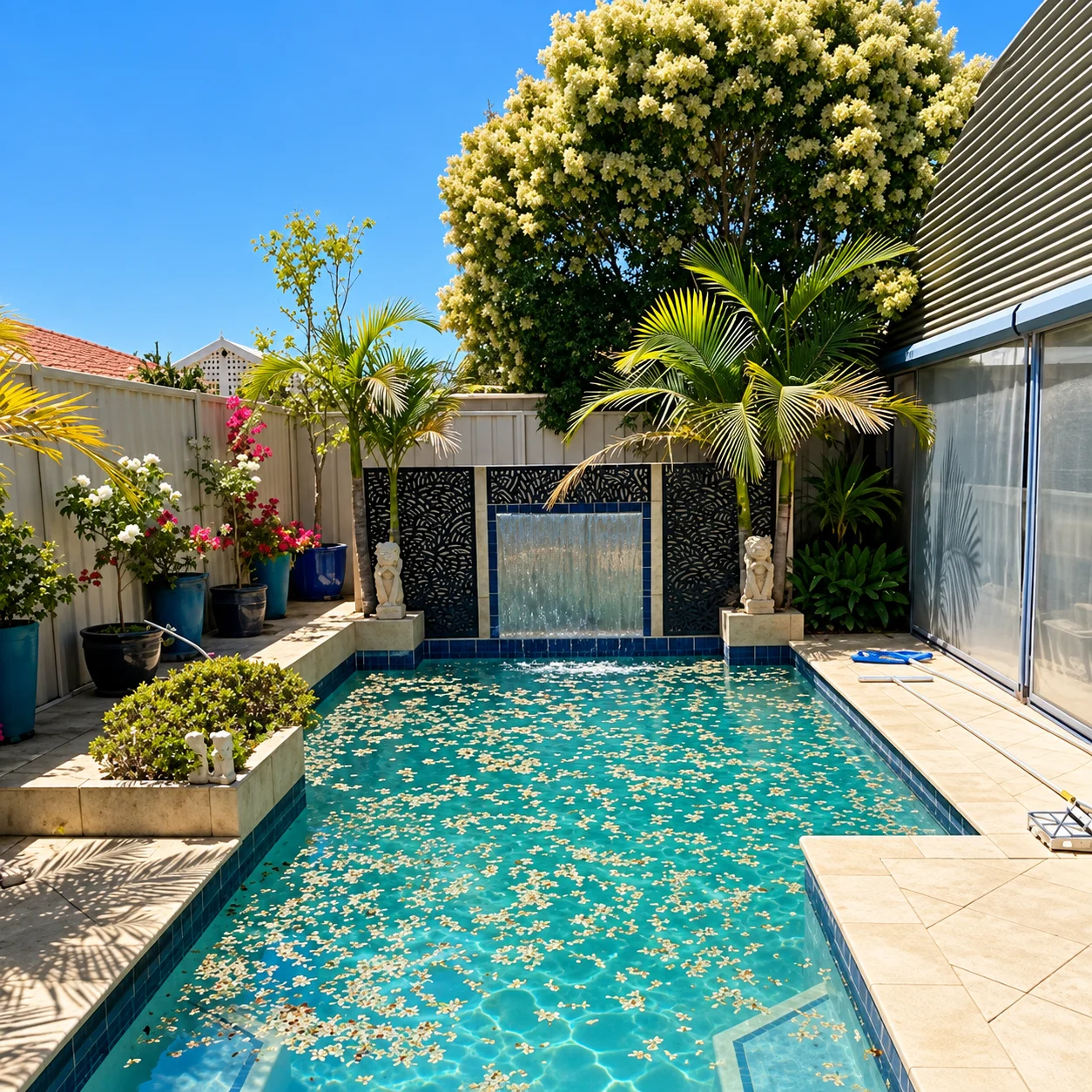
Not necessarily.
Leaves, flowers or berries falling into a swimming pool can be frustrating, but tree removal should not automatically be the first solution.
In many cases, selective pruning and ongoing maintenance can substantially improve the situation.
This is particularly important with healthy mature trees that provide privacy, screening, habitat, shade and character to the property.
It is also important to understand that local councils may not consider leaf litter or shade alone sufficient justification for removing a protected tree.
For example, Randwick City Council specifically identifies leaf drop into swimming pools and shade as matters that will not generally justify tree removal. Council instead notes that canopy thinning may be considered to allow more filtered light while retaining the tree.
Always check the rules applying to your property before carrying out significant pruning or tree removal.
Can Tree Pruning Reduce Swimming Pool Maintenance Costs?
Professional pruning cannot eliminate every leaf that enters an outdoor pool.
However, reducing a large concentration of branches directly above the water can make ongoing maintenance easier.
Less material falling directly into the pool can mean less manual cleaning and less organic debris entering skimmer baskets and the filtration system.
The objective is preventative maintenance: managing the surrounding trees before an excessively overgrown canopy creates unnecessary ongoing work around the pool.
It is important not to promise that pruning will eliminate pool cleaning or prevent all future pool maintenance costs. Trees naturally shed leaves, flowers and other material throughout their life cycle.
Which Trees Can Be Messy Around Swimming Pools?
There is no universally “bad” swimming-pool tree.
A species that works well in a large garden may cause significant maintenance problems when planted immediately beside a pool.
The important factors include the tree’s:
- Mature size
- Canopy spread
- Growth rate
- Leaf drop
- Flowers
- Fruit or berries
- Seed pods
- Root characteristics
- Response to pruning
- Distance from the pool and surrounding structures
Some trees commonly found around established Sydney properties can create additional pool maintenance when growing too close to the water.
Ficus
Many Ficus species can eventually develop large, dense canopies and substantial root systems. They can be beautiful feature trees where adequate space is available, but their mature size needs to be considered carefully before planting close to swimming pools, paving and structures.
Celtis
Celtis trees can develop broad canopies and produce berries and seasonal debris.
Where an established Celtis extends directly over a swimming pool, selective pruning may help reduce the amount of canopy above the water.
Jacaranda
Jacarandas are one of Sydney’s most recognisable flowering trees. They can look spectacular in bloom, but flowers, leaves and other seasonal material can create considerable clean-up when the canopy is positioned directly above a pool.
Fruiting Trees
Fruit trees can be particularly inconvenient immediately beside a swimming pool. Fruit, flowers and leaves falling into the pool area can increase cleaning, while fallen fruit around paving can also become messy underfoot.
Palms
Palms can work beautifully in pool landscaping, but species selection and positioning matter. Depending on the species, fruit, flowers and old fronds can require regular maintenance. The lesson is not that these trees should never be planted near a swimming pool. It is simply that the right tree in the right location can dramatically reduce future maintenance. Pasted text
Pool Tree Pruning Help
If branches are dropping debris, blocking sunlight or becoming difficult to manage, Home Tree Services can assess the tree and recommend an appropriate pruning approach.
What Makes a Good Tree Near a Swimming Pool?
When choosing a new tree for a pool area, consider the mature tree rather than the small tree you see at the nursery.
A tree that looks perfectly proportioned when planted can become a very different proposition 10 or 20 years later.
Ideally, consider:
- Mature height and canopy width
- Available soil and root space
- Distance from the pool shell and paving
- Amount of seasonal leaf, flower or fruit drop
- Whether the species suits Sydney’s climate and the individual site
- How the tree responds to appropriate pruning
- Whether the tree will eventually interfere with neighbouring properties or buildings
Good landscape design should consider both the pool and the mature vegetation together.
If space is limited, a smaller-growing species positioned appropriately may be a better long-term option than repeatedly trying to control a large tree that was planted too close to the pool.
Do I Need Council Approval to Prune a Tree Around My Pool?
Possibly.
Council rules apply regardless of whether the reason for pruning is swimming pool maintenance, additional sunlight or building clearance.
Different Sydney councils have different requirements.
For example, Randwick protects many private trees and may require approval depending on the tree and proposed work.
Waverley also protects trees meeting its prescribed dimensions, with specific exemptions applying in certain circumstances.
Woollahra protects many trees based on their height and crown spread, and pruning of protected trees may require a Tree Works Application.
Inner West Council currently allows certain limited pruning as exempt work, including annual pruning of branches below 100 mm diameter up to a maximum of 10% of the total canopy, provided the other applicable requirements are met. More substantial pruning can require approval.
Heritage properties, significant trees, habitat trees and other circumstances may have additional controls.
Always check the current rules for the specific property and council before commencing work.
A qualified arborist can help determine an appropriate pruning specification and identify when council approval may be required.
Pool Tree Pruning in Sydney’s Eastern Suburbs
Swimming pools and established trees are common throughout Sydney’s Eastern Suburbs.
Home Tree Services provides tree pruning and pool clearance throughout areas including:
Bellevue Hill, Vaucluse, Rose Bay, Dover Heights, Bondi, Bronte, Coogee, Clovelly, Randwick, Maroubra, South Coogee, Matraville and surrounding suburbs.
Properties in these areas often have mature trees growing in relatively limited backyard spaces, making careful pruning particularly important.
Rather than simply removing large amounts of foliage, the aim should be to identify the branches creating the problem and achieve useful clearance while retaining a balanced canopy.
Pool Tree Pruning in Sydney’s Inner West
We also provide tree pruning and maintenance throughout Sydney’s Inner West, including:
Marrickville, Petersham, Stanmore, Lewisham, Balmain, Leichhardt, Ashfield, Five Dock, Abbotsford and surrounding suburbs.
Older Inner West properties can have established trees growing close to pools, fences, houses and neighbouring properties.
Selective pruning can often help manage these competing spaces without unnecessarily removing healthy trees.

Swimming Pool Tree Maintenance
If trees around your swimming pool are becoming difficult to manage, Home Tree Services can inspect the property and recommend a practical pruning approach.
Depending on the tree, this may include:
- Selective pool clearance
- Canopy thinning
- Reduction of branches extending over the pool
- Deadwood removal
- Clearance from surrounding structures
- Ongoing maintenance pruning
The goal is simple: reduce unnecessary pool maintenance while keeping healthy trees wherever practical.
If you’re unsure what can be pruned or whether council approval is required, contact Home Tree Services to arrange a site inspection and quote.
Home Tree Services
Your Safe Choice for All Tree Services.