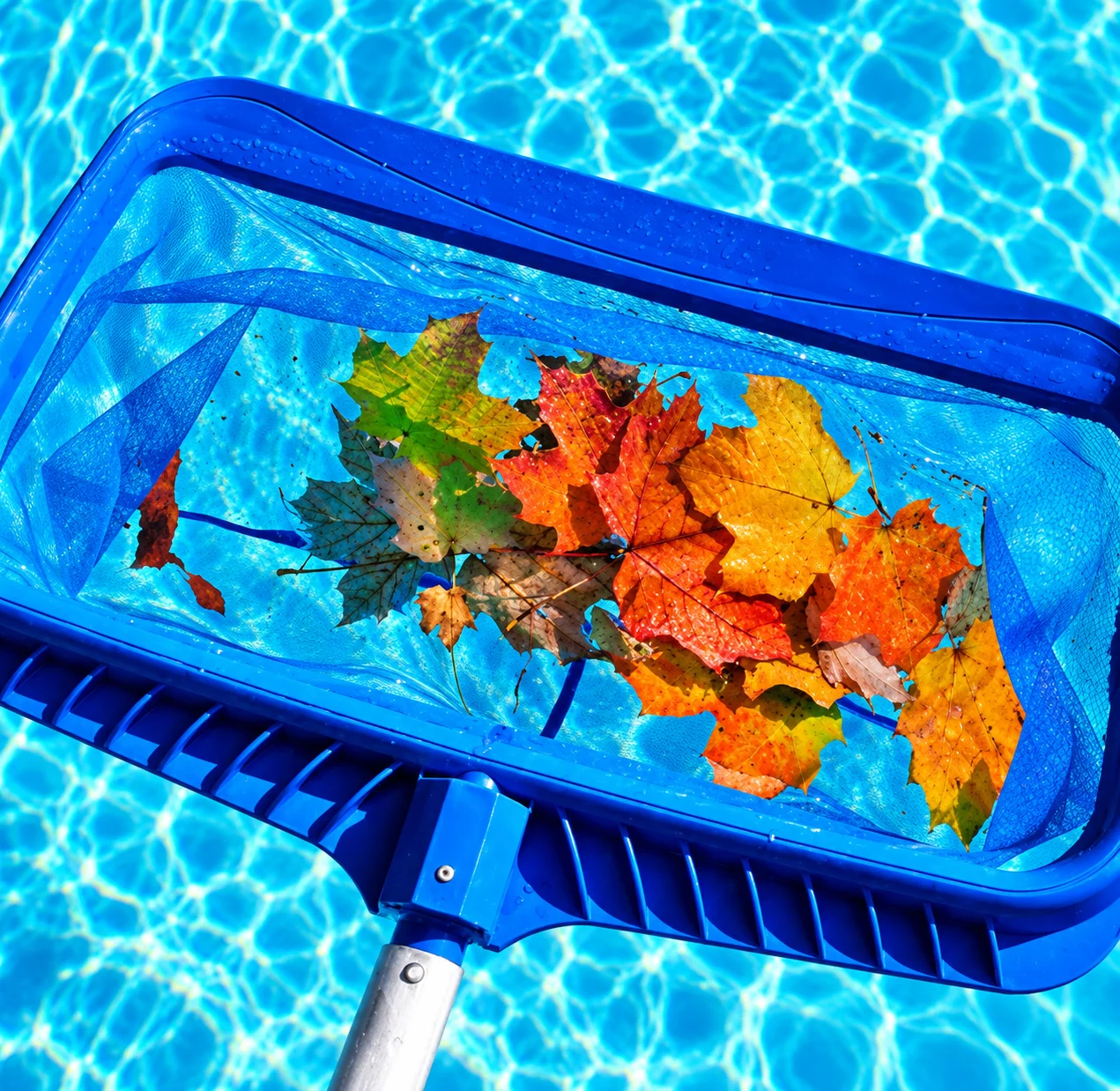
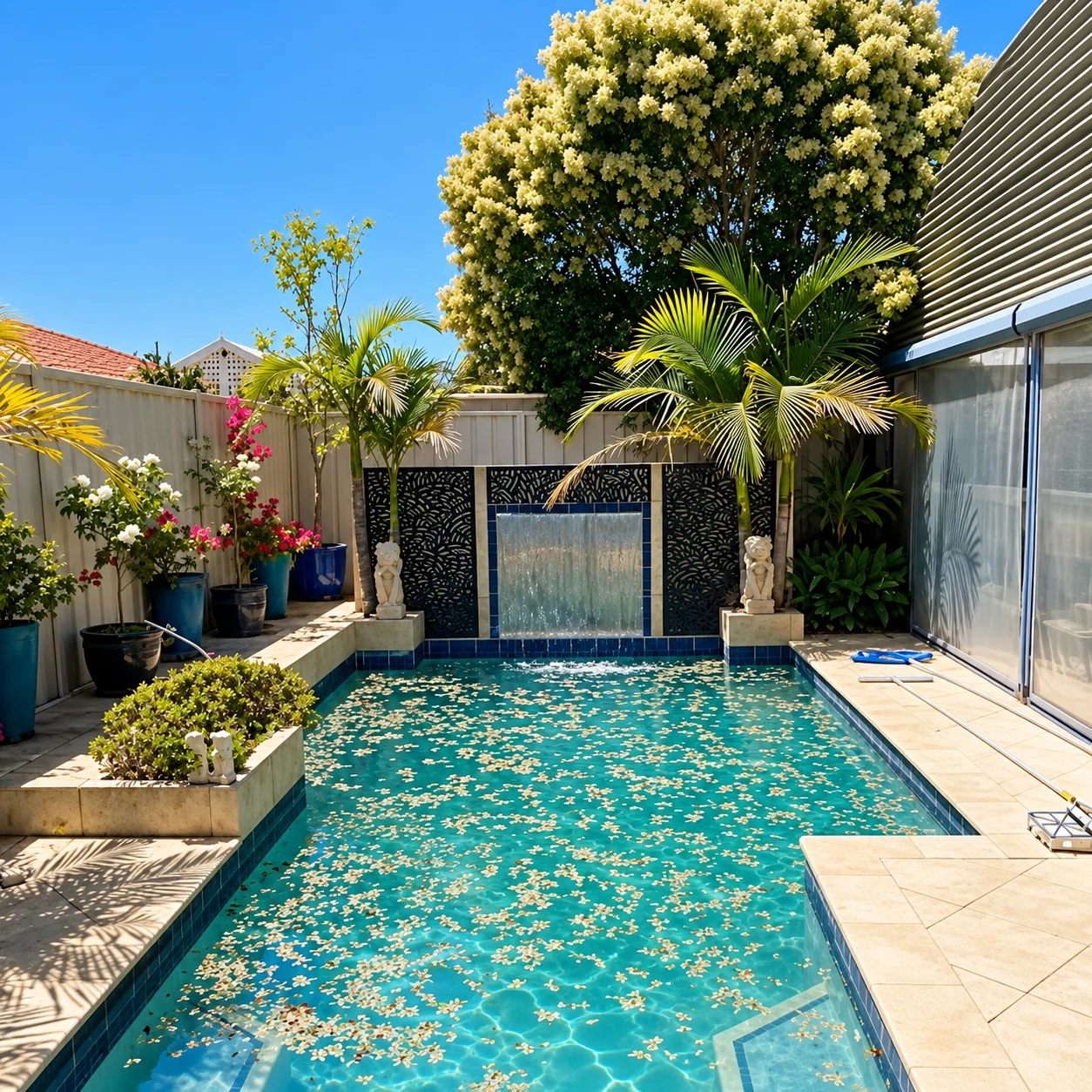
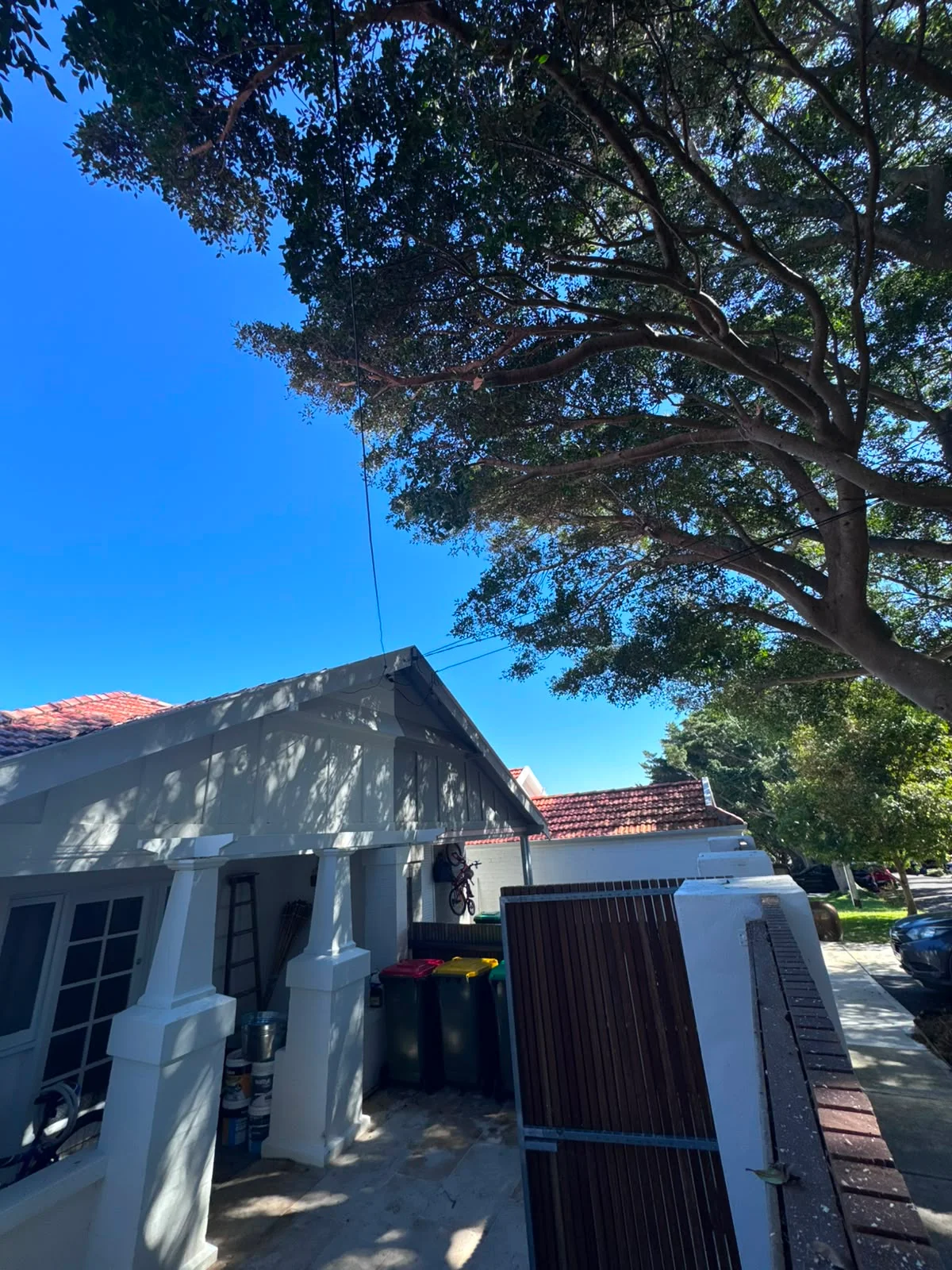
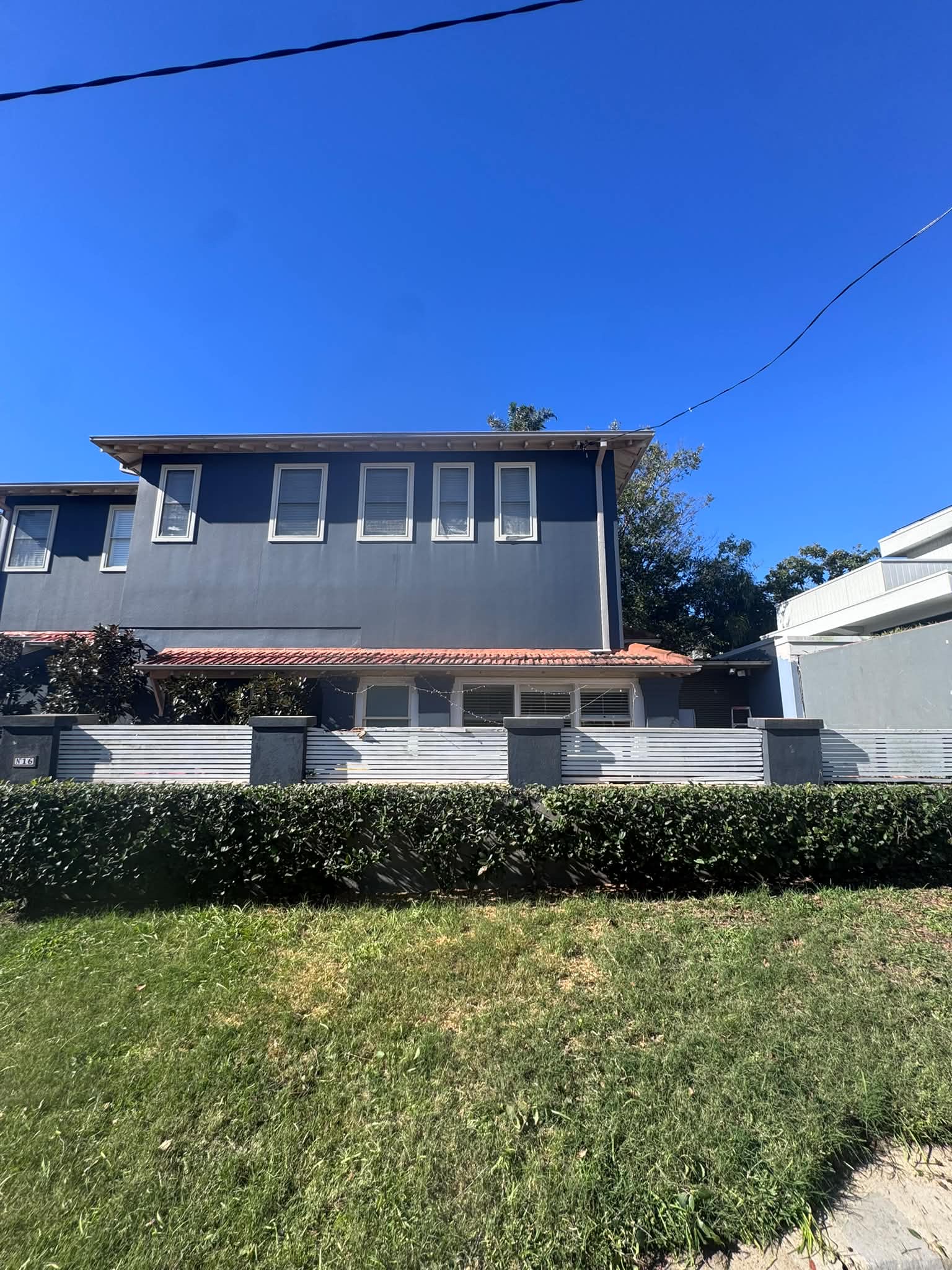
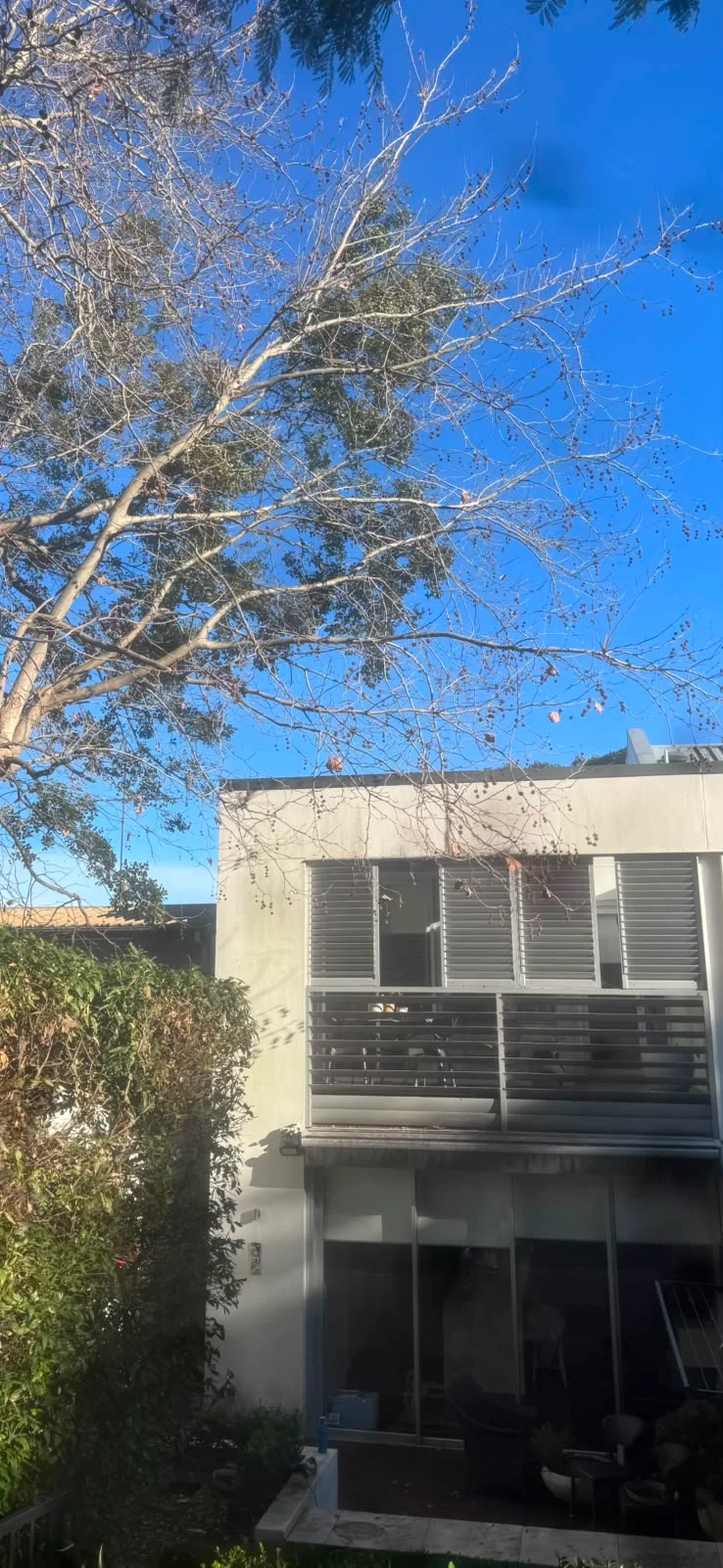
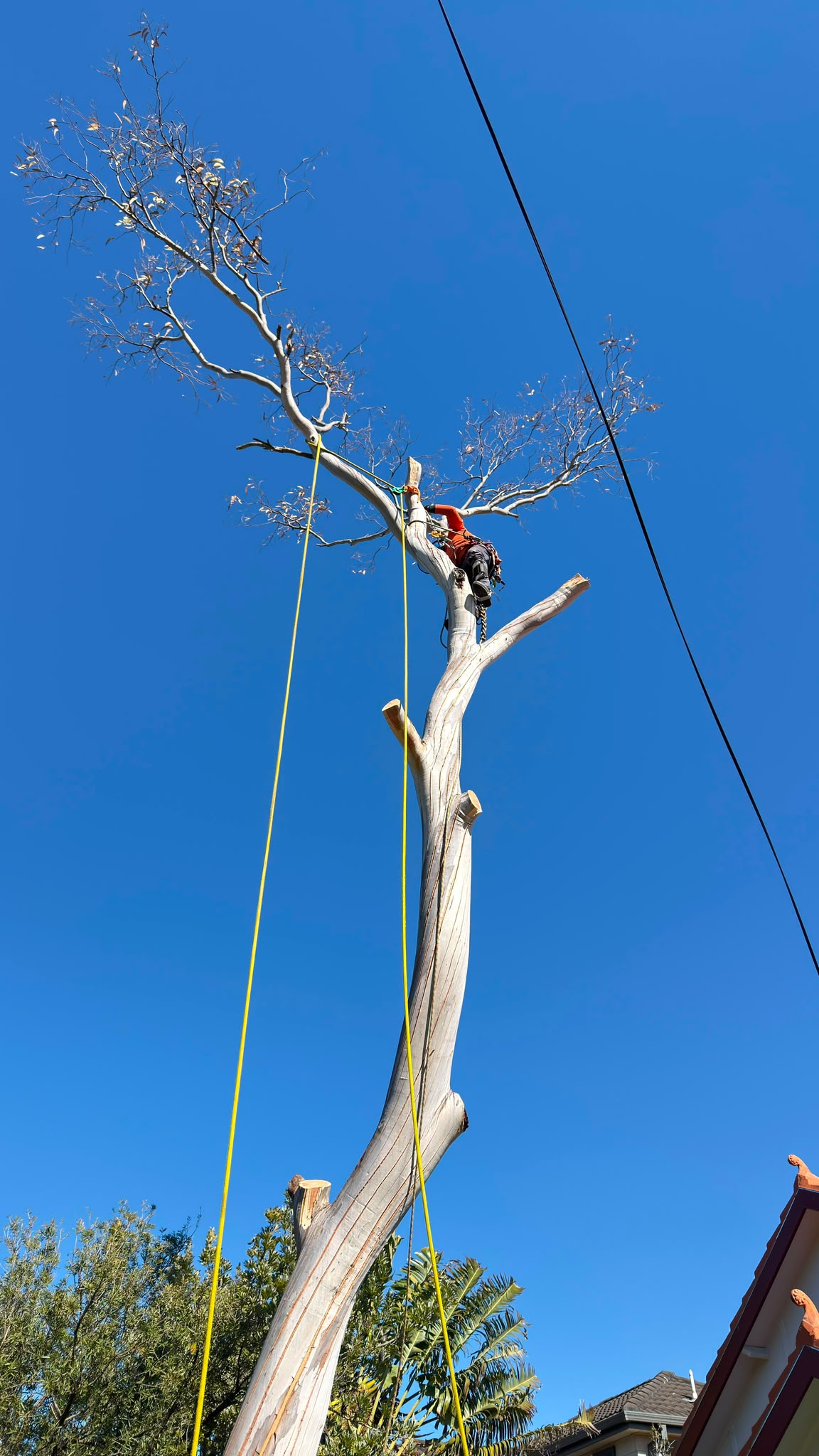
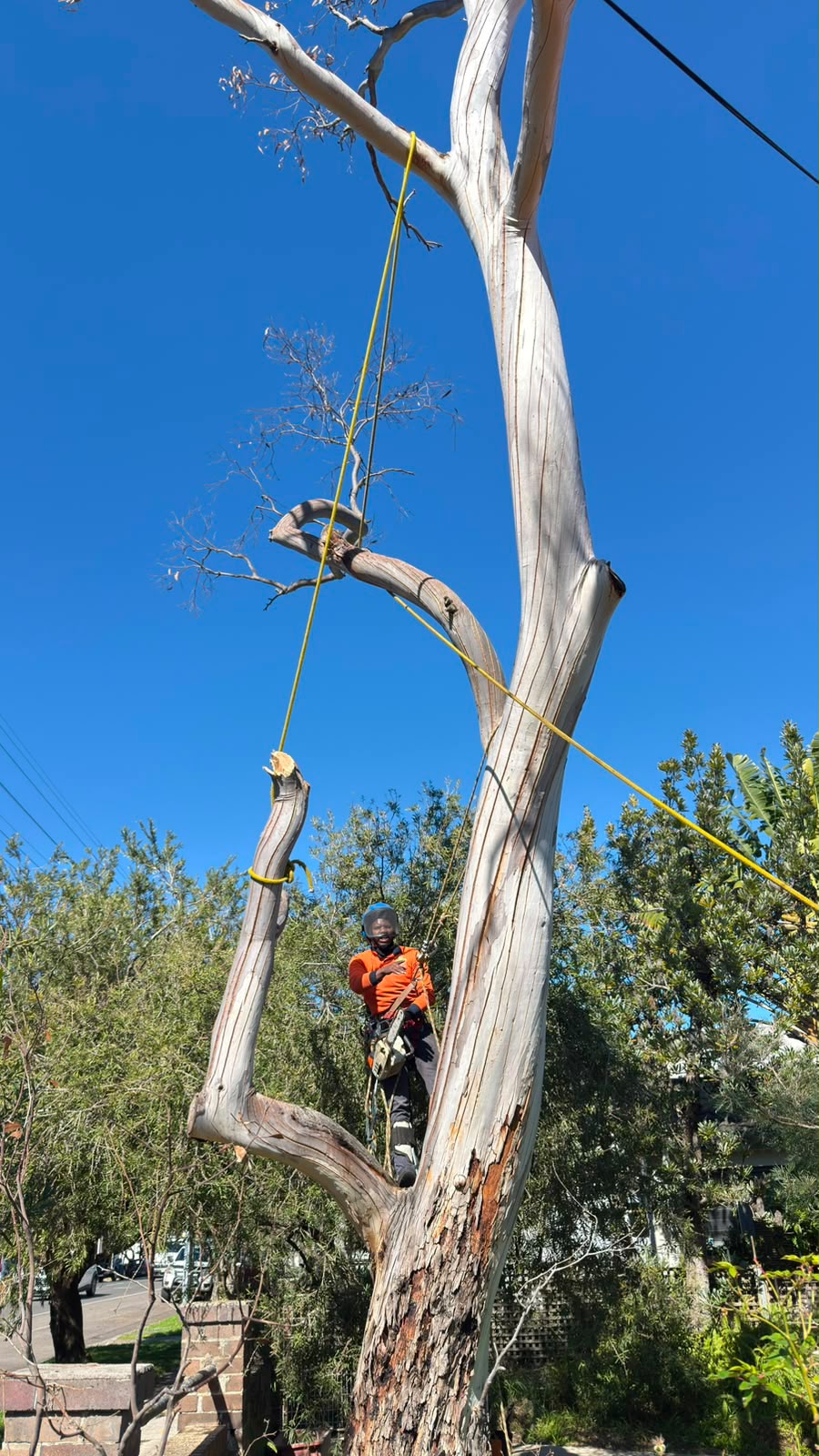
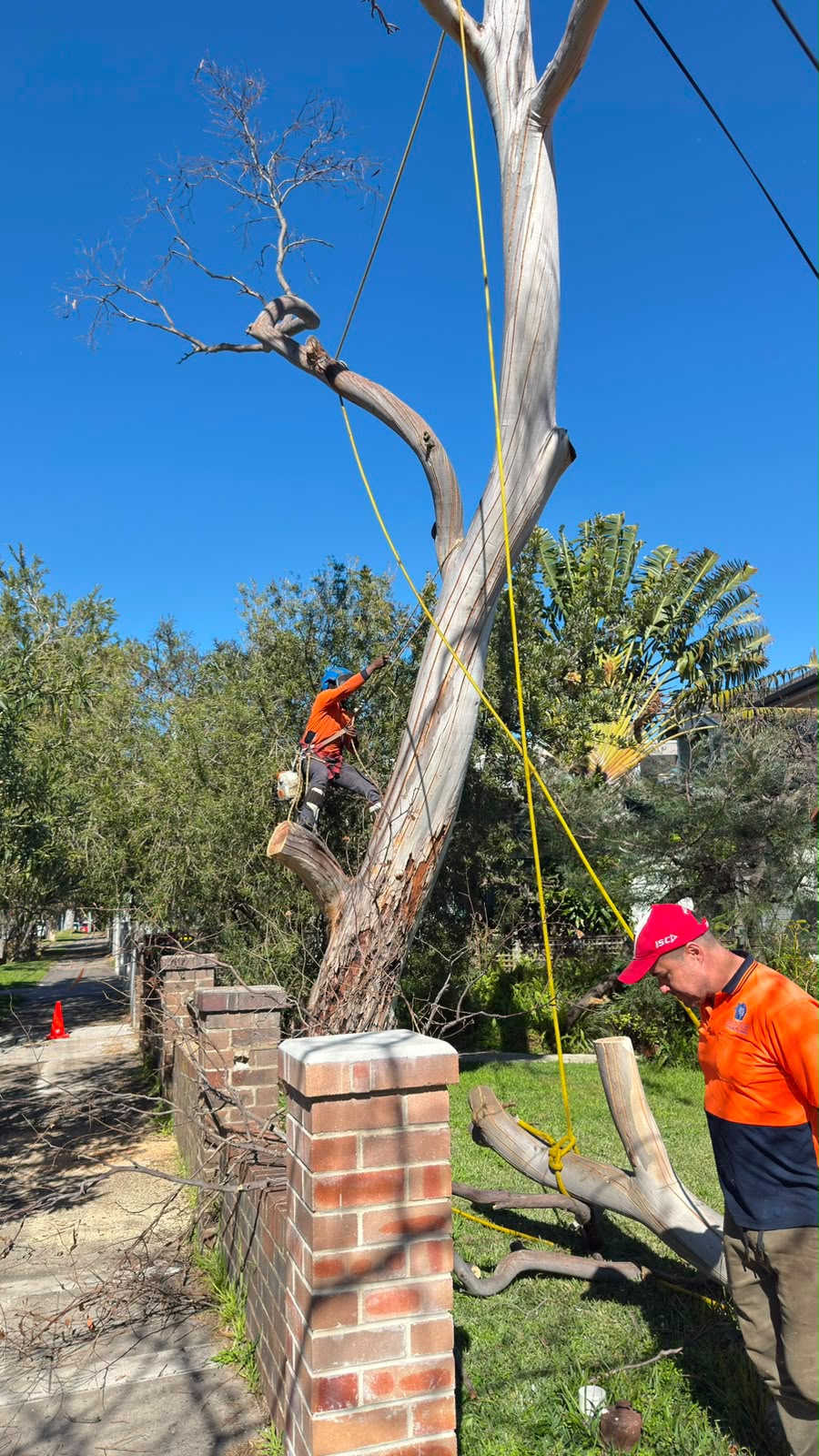
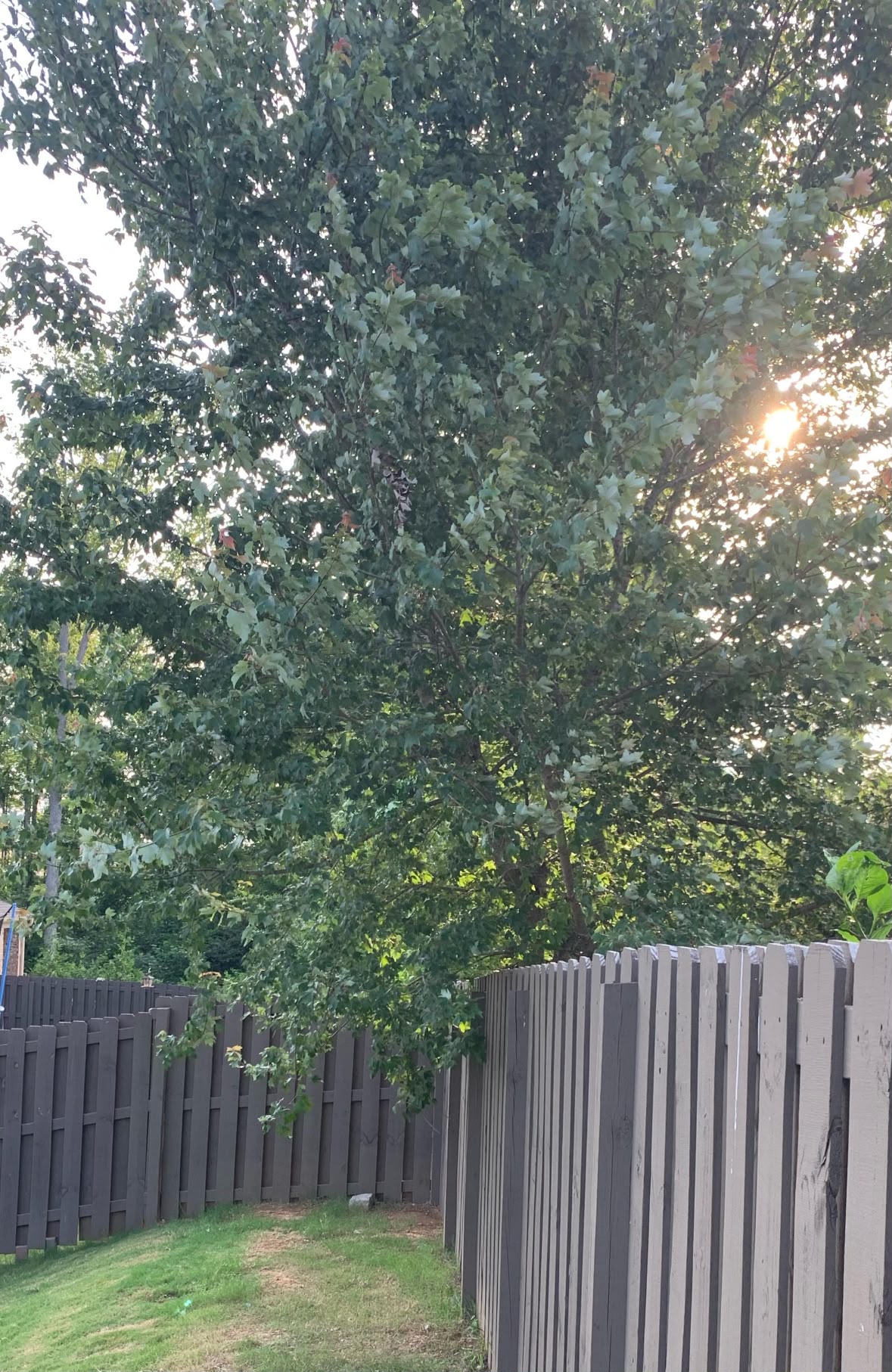
A beautiful mature tree can add shade, privacy and character to a backyard — but when its canopy starts growing directly over a swimming pool, it can also create a lot of extra maintenance.
Leaves, flowers, berries, seeds and small branches can continually fall into the water. A dense canopy can block sunlight, and overhanging branches can make the entire pool area feel darker and less inviting.
This is a common problem we see at properties throughout Sydney’s Eastern Suburbs and Inner West.
The good news is that removing the tree is not always necessary.
In many situations, careful tree pruning can reduce the amount of canopy over the pool, improve sunlight and make ongoing pool maintenance considerably easier while retaining a healthy tree.
Some leaf litter around an outdoor swimming pool is unavoidable.
The problem begins when a substantial part of a tree canopy extends directly above the pool.
Depending on the tree species and season, this can result in a regular build-up of:
All of this material eventually needs to be removed.
Large amounts of organic debris can fill skimmer baskets and increase the workload on pool filtration and cleaning systems. It also means more time spent manually cleaning the pool and surrounding areas.
Reducing the amount of canopy directly above the water can help reduce this ongoing maintenance.
A qualified arborist should look at the species, size, structure and position of the tree before deciding how it should be pruned.
However, there are several techniques that can often help.
Selected branches growing directly towards or over the swimming pool can sometimes be reduced back to suitable growth points. The objective is not necessarily to create a completely empty space above the pool. Instead, the arborist can selectively redirect the canopy away from the pool while maintaining the natural structure and balance of the tree.
Where appropriate, selective canopy thinning can reduce canopy density. This can allow more filtered sunlight through the tree while retaining its overall size and character. It can also reduce the concentration of foliage directly above the swimming pool. Canopy thinning needs to be carried out carefully. Excessive thinning or indiscriminate removal of branches can negatively affect the tree’s health, structure and appearance.
Sometimes the problem comes from only one section of the tree. Rather than pruning the entire canopy, selected limbs extending towards the swimming pool may be reduced. This targeted approach can be particularly useful where the rest of the tree is providing valuable privacy or shade.
For fast-growing trees, one pruning visit may not provide a permanent solution. A maintenance program can keep regrowth under control before the canopy becomes heavily established above the pool again. How frequently a tree requires pruning depends on its species, age, condition, growth rate and the amount of clearance required.
Yes, in appropriate circumstances.
A dense tree canopy can substantially reduce the amount of sunlight reaching a swimming pool and surrounding entertaining area.
For some homeowners, this becomes particularly noticeable when a tree has grown considerably larger than when the pool or landscaping was originally designed.
Selective canopy thinning can sometimes allow considerably more filtered light through the tree without requiring its removal.
The objective should not be to excessively prune the tree simply to maximise sunlight.
Instead, professional pruning should aim for a sensible balance between additional light, pool usability and maintaining a healthy, structurally sound tree.
Not necessarily.
Leaves, flowers or berries falling into a swimming pool can be frustrating, but tree removal should not automatically be the first solution.
In many cases, selective pruning and ongoing maintenance can substantially improve the situation.
This is particularly important with healthy mature trees that provide privacy, screening, habitat, shade and character to the property.
It is also important to understand that local councils may not consider leaf litter or shade alone sufficient justification for removing a protected tree.
For example, Randwick City Council specifically identifies leaf drop into swimming pools and shade as matters that will not generally justify tree removal. Council instead notes that canopy thinning may be considered to allow more filtered light while retaining the tree.
Always check the rules applying to your property before carrying out significant pruning or tree removal.
Professional pruning cannot eliminate every leaf that enters an outdoor pool.
However, reducing a large concentration of branches directly above the water can make ongoing maintenance easier.
Less material falling directly into the pool can mean less manual cleaning and less organic debris entering skimmer baskets and the filtration system.
The objective is preventative maintenance: managing the surrounding trees before an excessively overgrown canopy creates unnecessary ongoing work around the pool.
It is important not to promise that pruning will eliminate pool cleaning or prevent all future pool maintenance costs. Trees naturally shed leaves, flowers and other material throughout their life cycle.
There is no universally “bad” swimming-pool tree.
A species that works well in a large garden may cause significant maintenance problems when planted immediately beside a pool.
The important factors include the tree’s:
Some trees commonly found around established Sydney properties can create additional pool maintenance when growing too close to the water.
Many Ficus species can eventually develop large, dense canopies and substantial root systems. They can be beautiful feature trees where adequate space is available, but their mature size needs to be considered carefully before planting close to swimming pools, paving and structures.
Celtis trees can develop broad canopies and produce berries and seasonal debris.
Where an established Celtis extends directly over a swimming pool, selective pruning may help reduce the amount of canopy above the water.
Jacarandas are one of Sydney’s most recognisable flowering trees. They can look spectacular in bloom, but flowers, leaves and other seasonal material can create considerable clean-up when the canopy is positioned directly above a pool.
Fruit trees can be particularly inconvenient immediately beside a swimming pool. Fruit, flowers and leaves falling into the pool area can increase cleaning, while fallen fruit around paving can also become messy underfoot.
Palms can work beautifully in pool landscaping, but species selection and positioning matter. Depending on the species, fruit, flowers and old fronds can require regular maintenance. The lesson is not that these trees should never be planted near a swimming pool. It is simply that the right tree in the right location can dramatically reduce future maintenance. Pasted text
If branches are dropping debris, blocking sunlight or becoming difficult to manage, Home Tree Services can assess the tree and recommend an appropriate pruning approach.
When choosing a new tree for a pool area, consider the mature tree rather than the small tree you see at the nursery.
A tree that looks perfectly proportioned when planted can become a very different proposition 10 or 20 years later.
Ideally, consider:
Good landscape design should consider both the pool and the mature vegetation together.
If space is limited, a smaller-growing species positioned appropriately may be a better long-term option than repeatedly trying to control a large tree that was planted too close to the pool.
Possibly.
Council rules apply regardless of whether the reason for pruning is swimming pool maintenance, additional sunlight or building clearance.
Different Sydney councils have different requirements.
For example, Randwick protects many private trees and may require approval depending on the tree and proposed work.
Waverley also protects trees meeting its prescribed dimensions, with specific exemptions applying in certain circumstances.
Woollahra protects many trees based on their height and crown spread, and pruning of protected trees may require a Tree Works Application.
Inner West Council currently allows certain limited pruning as exempt work, including annual pruning of branches below 100 mm diameter up to a maximum of 10% of the total canopy, provided the other applicable requirements are met. More substantial pruning can require approval.
Heritage properties, significant trees, habitat trees and other circumstances may have additional controls.
Always check the current rules for the specific property and council before commencing work.
A qualified arborist can help determine an appropriate pruning specification and identify when council approval may be required.
Swimming pools and established trees are common throughout Sydney’s Eastern Suburbs.
Home Tree Services provides tree pruning and pool clearance throughout areas including:
Bellevue Hill, Vaucluse, Rose Bay, Dover Heights, Bondi, Bronte, Coogee, Clovelly, Randwick, Maroubra, South Coogee, Matraville and surrounding suburbs.
Properties in these areas often have mature trees growing in relatively limited backyard spaces, making careful pruning particularly important.
Rather than simply removing large amounts of foliage, the aim should be to identify the branches creating the problem and achieve useful clearance while retaining a balanced canopy.
We also provide tree pruning and maintenance throughout Sydney’s Inner West, including:
Marrickville, Petersham, Stanmore, Lewisham, Balmain, Leichhardt, Ashfield, Five Dock, Abbotsford and surrounding suburbs.
Older Inner West properties can have established trees growing close to pools, fences, houses and neighbouring properties.
Selective pruning can often help manage these competing spaces without unnecessarily removing healthy trees.
If trees around your swimming pool are becoming difficult to manage, Home Tree Services can inspect the property and recommend a practical pruning approach.
Depending on the tree, this may include:
The goal is simple: reduce unnecessary pool maintenance while keeping healthy trees wherever practical.
If you’re unsure what can be pruned or whether council approval is required, contact Home Tree Services to arrange a site inspection and quote.
Home Tree Services
Your Safe Choice for All Tree Services.
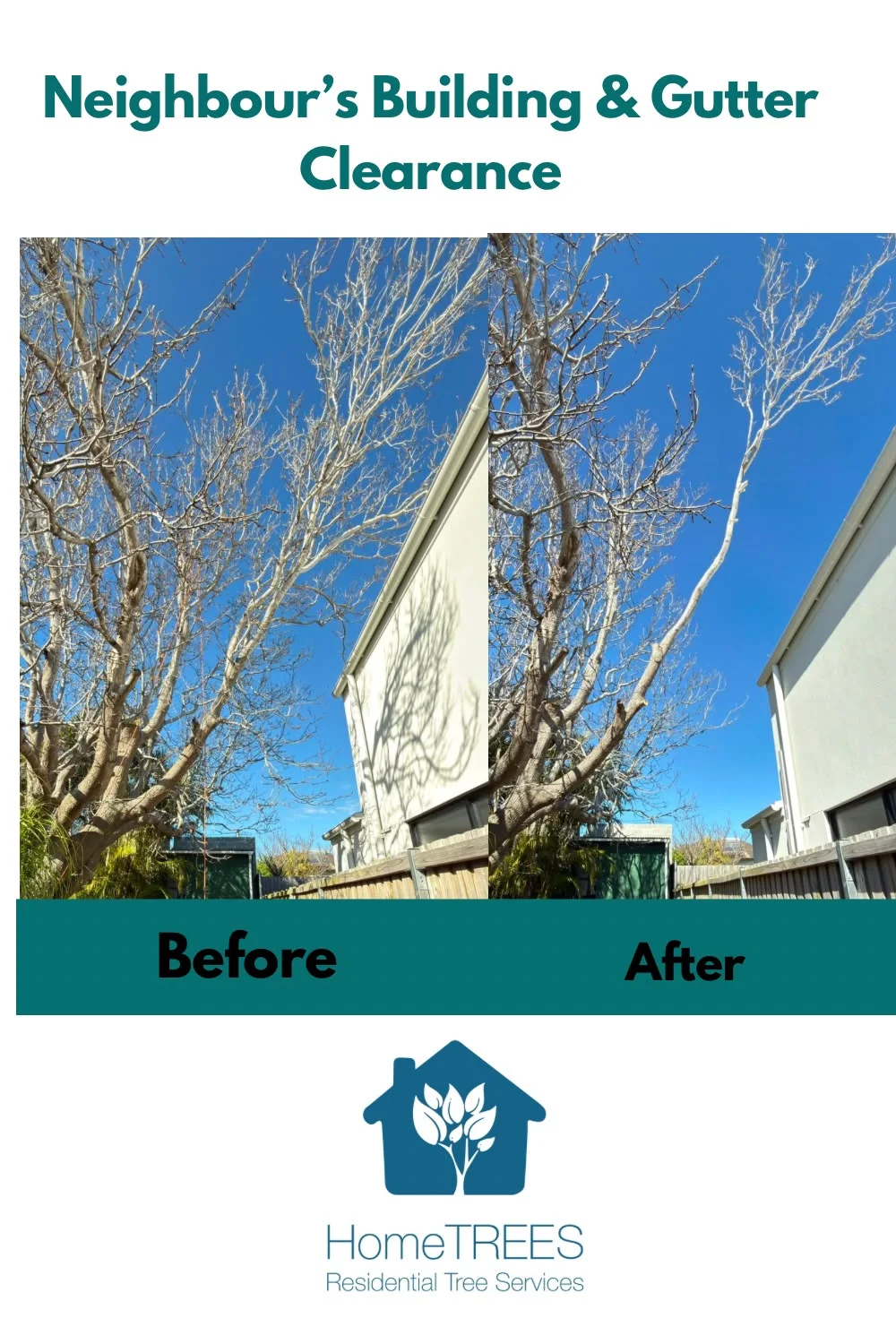
Trees growing across property boundaries are one of the most common causes of concern between neighbours.
A tree may be completely healthy but have branches extending over a fence, touching a roof, dropping leaves into gutters or growing close to buildings.
So what can you actually do when your neighbour’s tree starts affecting your property?
In most situations, the best solution starts with good communication, understanding the local council rules and finding a practical way to manage the tree without unnecessarily damaging or removing it.
Before turning a tree problem into a neighbour dispute, having a friendly conversation is usually the best place to start.
Your neighbour may not even realise that their tree is causing a problem on your side of the boundary.
Show them what is happening and explain the issue clearly.
It might be branches touching your roof, deadwood hanging over your backyard, excessive overhang above a fence or branches rubbing against the building.
In many cases, the solution may simply be professional pruning to create appropriate clearance while keeping the tree healthy.
Getting an arborist to inspect the tree and provide a clear quote can also make the conversation easier because both neighbours can understand exactly what work is being proposed.
This is where homeowners need to be careful.
It is often assumed that anything growing across the boundary can simply be cut back. However, protected-tree regulations and local council requirements can still apply.
The rules also vary between Sydney councils.
For example, Randwick City Council states that an application is required when pruning a tree located on a neighbouring property. Without the tree owner’s consent to enter their property, Council can only approve selective pruning of branches located within the applicant’s property.
Waverley Council also requires written consent from the tree owner for applications involving pruning or removal of trees on neighbouring property.
For this reason, don’t assume that the property boundary automatically overrides council tree controls.
Before carrying out substantial pruning, check the requirements for your particular council and property.
This is another question we hear regularly.
Unfortunately, there isn’t always a simple answer such as “the owner of the tree always pays”.
For example, Randwick City Council specifically explains that agreements or disagreements regarding pruning works and who pays for them are private matters between the affected parties.
The best approach is usually to discuss the problem with your neighbour before arranging the work.
A professional arborist can provide a written quote describing exactly what needs to be pruned. The neighbours can then discuss how the cost will be handled before work begins.
Keeping the conversation friendly at this stage can prevent a relatively straightforward tree-pruning job from developing into a much larger dispute.
Councils generally don’t act as mediators for ordinary private disputes between neighbours.
If a neighbour’s tree is causing, or is likely to cause, property damage and an agreement cannot be reached, there are legal avenues available in NSW.
Depending on the circumstances, an application may ultimately be made to the NSW Land and Environment Court under legislation dealing with tree disputes between neighbours.
This should generally be considered after reasonable attempts have been made to resolve the issue directly.
For specific legal questions about responsibility, property damage or compensation, homeowners should obtain appropriate legal advice.
A dangerous tree is different from a tree that is simply inconvenient.
A tree may require more urgent attention if there are concerns such as:
Some councils have processes for dealing with trees that present an immediate danger.
Randwick City Council, for example, states that where a neighbouring owner refuses to make a tree safe and it poses an imminent danger to people or property, Council may serve notice requiring the owner to remove the tree.
If you believe a tree presents an immediate safety risk, contact the relevant council or emergency service as appropriate rather than attempting dangerous tree work yourself.
Not every neighbour tree problem requires tree removal.
Often the issue can be resolved through selective building-clearance or boundary pruning.
Professional pruning may help create clearance from:
The aim should be to remove only what is necessary while maintaining the tree’s health, structure and natural form wherever possible.
This can often provide a much better outcome for both neighbours than unnecessary tree removal.
There is no single tree-pruning rule that applies to every property across Sydney.
Requirements can vary depending on:
That means advice that applies to a property in Coogee may not necessarily be identical to the requirements for a property in Bondi, Balmain or Marrickville.
Always check the current council requirements before carrying out significant work on a neighbouring tree.
Home Tree Services regularly assists homeowners with tree pruning, building clearance and boundary-tree issues throughout Sydney’s Eastern Suburbs, including:
Coogee, Maroubra, Randwick, Clovelly, Matraville, South Coogee, Kensington, Kingsford, Bondi, Bronte, Waverley, Rose Bay and Vaucluse.
Properties in these established suburbs often have mature trees growing close to boundaries, houses and neighbouring properties.
In many situations, careful pruning can provide the required clearance without removing the tree.
Neighbouring trees are also a common issue throughout Sydney’s Inner West, particularly on smaller blocks where houses, fences and mature trees can be positioned close together.
We provide tree pruning and arborist services throughout areas including:
Balmain, Marrickville, Petersham, Stanmore, Leichhardt, Ashfield, Newtown, Dulwich Hill, Five Dock, Abbotsford and surrounding Inner West suburbs.
Inner West Council also advises that where a neighbour’s tree is causing or likely to cause property damage and the neighbour is uncooperative, affected property owners can seek advice from the NSW Land and Environment Court.
An arborist can often help before a neighbour tree issue becomes a dispute.
A professional assessment can identify:
Most importantly, a clear professional recommendation gives both neighbours something practical to discuss.
The goal should always be to find a solution that protects the property, respects the neighbour and, wherever practical, keeps a healthy tree healthy.
If you have a neighbouring tree overhanging your property or you’re unsure what can safely be pruned, Home Tree Services can inspect the tree and provide practical arborist advice.
Home Tree Services
Your Safe Choice for All Tree Services.
One of the most common questions homeowners ask us is:
Can I remove a dead tree without council approval?
The answer depends on where you live.
Sydney councils have different rules for tree removal, and while some councils provide exemptions for trees that are confirmed dead, other councils may still require an application or supporting documentation.
Before removing any significant tree, it’s important to check the rules that apply to your particular property.
In some Sydney council areas, a genuinely dead tree may qualify for an exemption from the normal tree removal approval process.
However, you shouldn’t simply assume that because a tree looks dead it can automatically be removed.
Council requirements may be affected by factors including:
Taking photographs and keeping evidence of the tree’s condition before removal is also a sensible precaution.
There isn’t one simple tree removal rule covering every residential property in Sydney.
Each local council has its own tree management controls, exemptions and application processes.
This is why advice that applies to a property in Maroubra may not necessarily apply to a property in Mascot, Abbotsford or Woollahra.
Always check the current requirements for your property before organising tree removal.
Randwick City Council provides an exemption in certain circumstances for a tree that is dying, dead or poses a risk to human life or property, provided other relevant requirements are satisfied.
However, additional controls can apply to heritage properties, Heritage Conservation Areas, significant trees and wildlife habitat.
Council also requires evidence for certain exempt removals, so the condition of the tree should be properly documented before work begins.
This is particularly relevant for homeowners in suburbs including:
Woollahra Council’s tree controls also identify the removal of dead trees as exempt work.
However, different requirements can apply to dangerous trees and properties affected by heritage or other planning controls.
Properties throughout areas such as Woollahra, Paddington, Rose Bay, Vaucluse, Bellevue Hill and Double Bay can contain mature and significant trees, making it particularly important to check the applicable controls before beginning work.
This is where homeowners need to be careful about assuming that the same rules apply everywhere.
Bayside Council generally requires an application before pruning or removing a protected tree. When an application involves a tree that is dying, dead or dangerous, Council states that an arborist report from a suitably qualified arborist is required as supporting evidence.
Therefore, a dead tree in a Bayside suburb shouldn’t automatically be treated in the same way as a dead tree under another council’s exemption provisions.
This can affect properties in areas including:
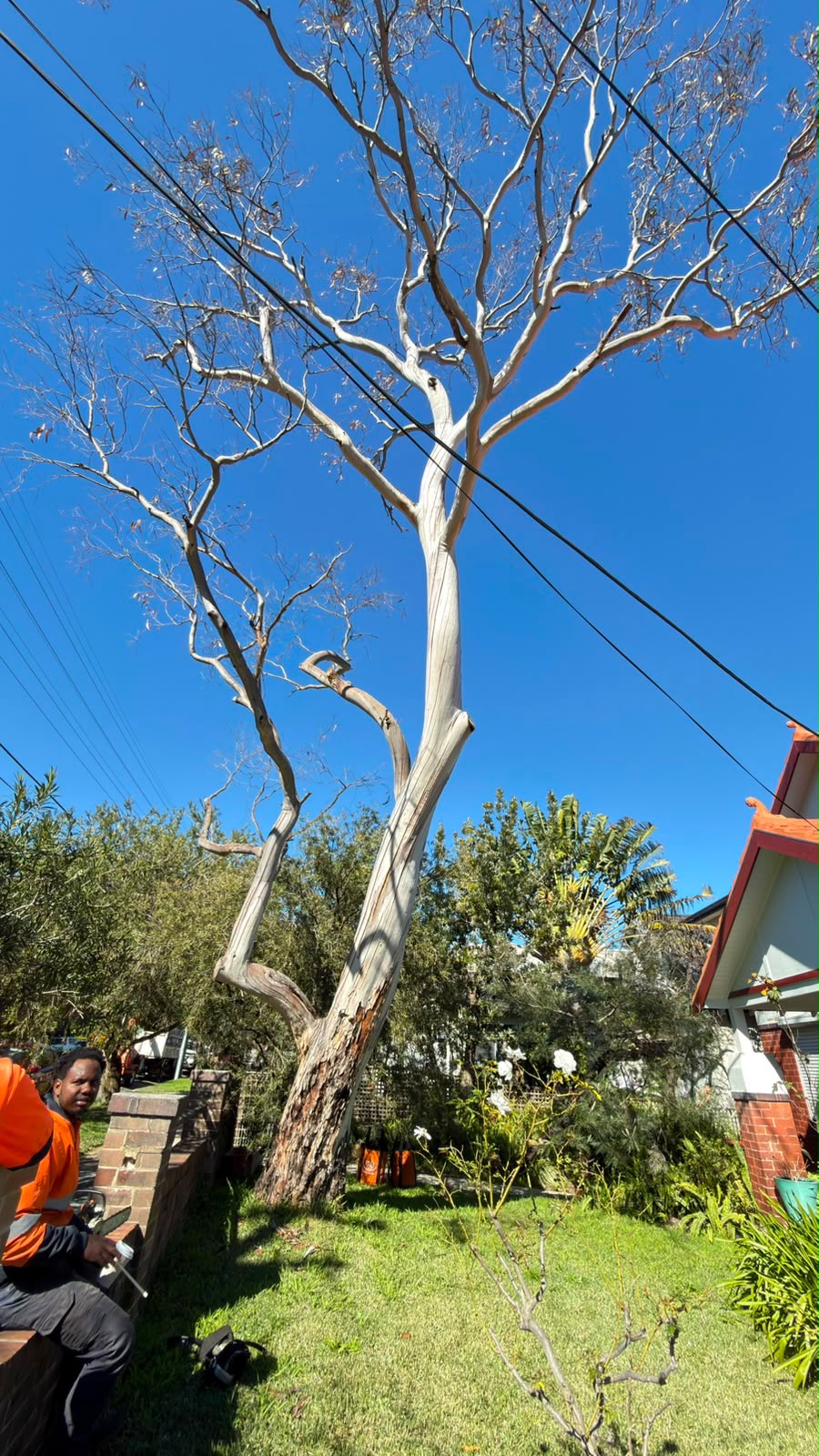
A tree without leaves isn’t necessarily dead.
Some deciduous trees naturally lose all their leaves during winter, while stressed trees can sometimes appear dead before producing new growth.
Possible signs of a dead or severely declining tree can include:
If you’re uncertain, having the tree professionally assessed before removal is the safest approach.
As a dead tree deteriorates, its branches and structural wood can become increasingly brittle.
Dead branches may fail unexpectedly, particularly during strong winds and storms.
The risk can become more significant when a dead tree is located close to:
Removing a dead tree safely can also become more technically difficult as deterioration progresses, which is another reason to seek professional advice rather than leaving a potentially hazardous tree indefinitely.
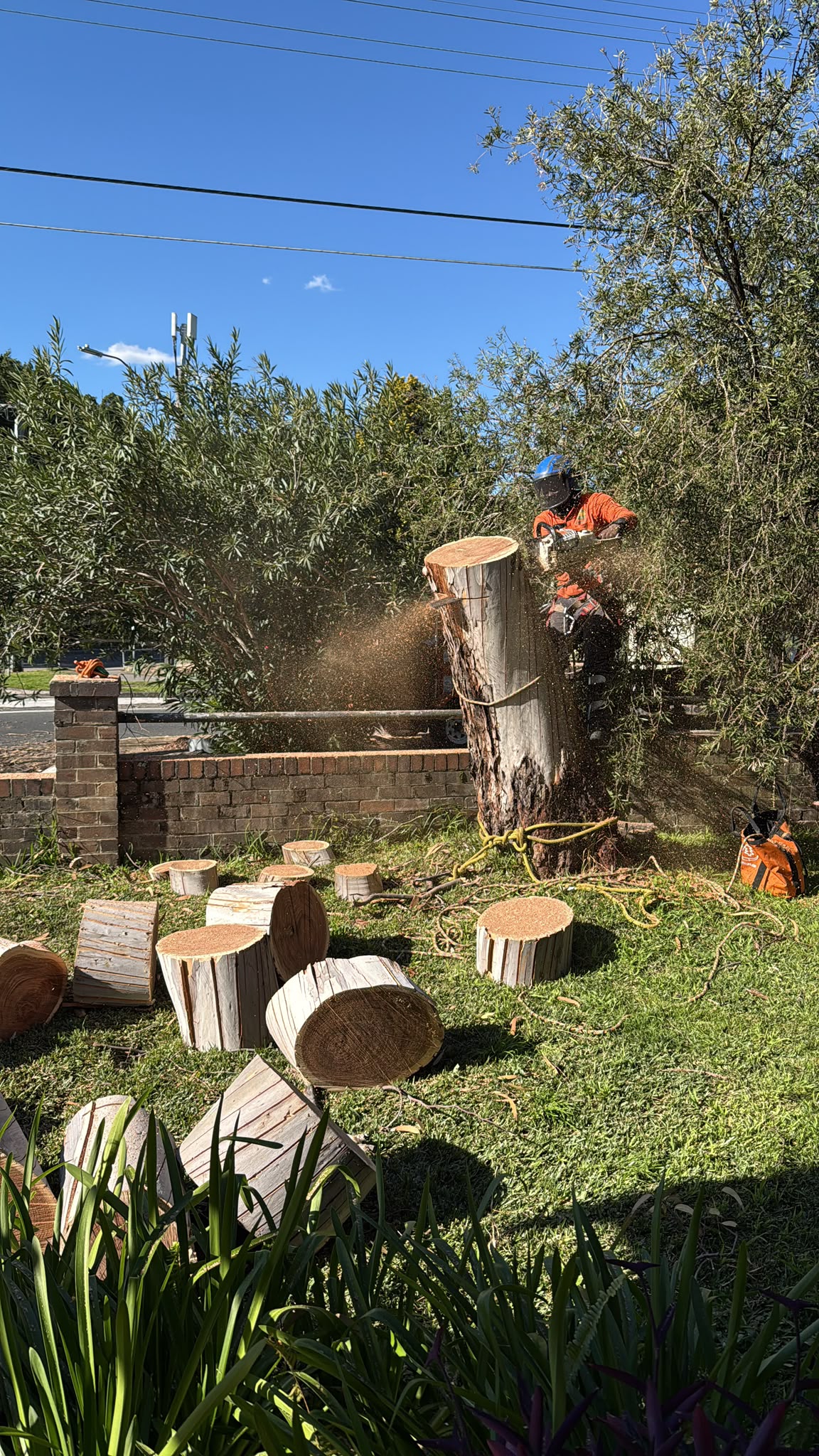
Home Tree Services provides professional dead tree removal, tree removal, stump grinding and arborist services throughout Sydney’s Eastern Suburbs and Inner West.
We regularly work throughout areas including Coogee, Maroubra, Randwick, Clovelly, Matraville, Kensington, Abbotsford, Five Dock, Balmain, Marrickville and surrounding suburbs.
If you have a dead or declining tree on your property, our qualified arborists can inspect the tree, explain the practical options and help you understand whether council requirements need to be checked before work proceeds.
Home Tree Services – Your Safe Choice for All Tree Services.
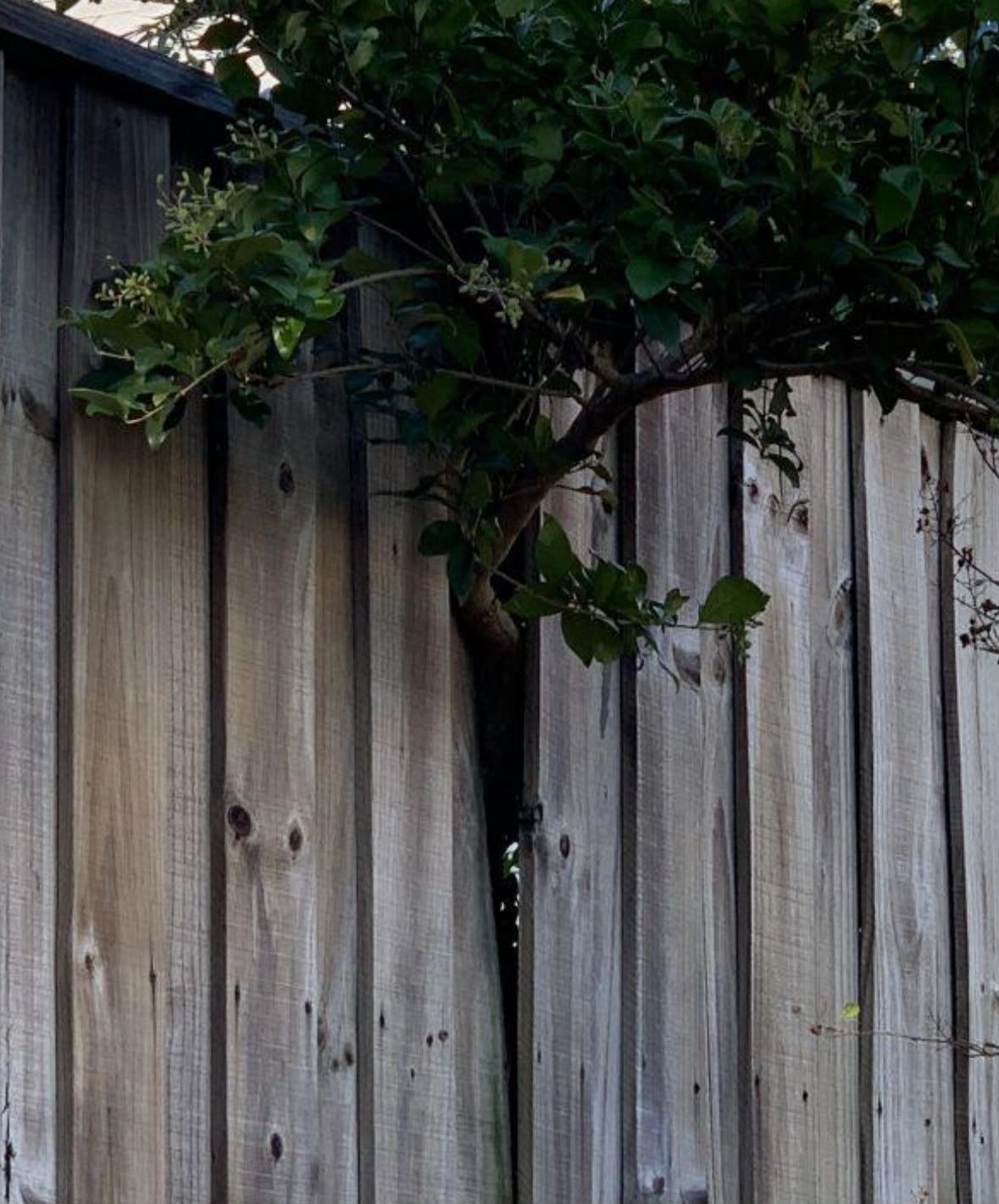
Trees are a valuable part of any property, providing shade, privacy and visual appeal. However, when trees are planted too close to boundary fences, they can sometimes create maintenance issues over time.
One of the questions we are regularly asked is:
Can trees damage a fence?
The answer is yes. Depending on the species, location and age of the tree, both roots and branches can contribute to fence damage if they are not properly managed.
Fortunately, many of these problems can be prevented with professional pruning and regular tree maintenance.
Tree roots naturally grow in search of moisture and nutrients. As they expand, they can place pressure on nearby structures, including fences, retaining walls and garden edging.
In some situations, roots may:
Not every tree will cause these problems, but large or fast-growing species planted close to boundary lines are more likely to require ongoing management.
Branches rubbing against fences can cause unnecessary wear, particularly during strong winds.
Overhanging branches may also:
Professional tree pruning can often create safe clearance while maintaining the tree’s natural appearance and long-term health.
Boundary trees are one of the most common questions homeowners ask.
If a neighbouring tree is affecting your fence, it’s always best to discuss the issue with your neighbour before any work is carried out.
Depending on the circumstances, professional pruning may resolve the problem without removing the tree.
If council approval is required, a qualified arborist can help identify the appropriate process.
In many cases, complete tree removal is not necessary.
Professional pruning can often:
Every tree should be assessed individually to determine the most suitable solution.
Home Tree Services provides professional tree pruning, building clearance and tree removal throughout Sydney’s Eastern Suburbs and Inner West, including:
Whether your tree is touching a fence, growing over a boundary or creating ongoing maintenance issues, our experienced arborists can recommend a safe and practical solution.
Every property is different.
Tree species, root systems, fence construction and council regulations all influence the best approach.
If you’re concerned about a tree growing too close to your fence, Home Tree Services can provide a professional assessment and recommend whether pruning, building clearance or tree removal is the most appropriate option.
Our team proudly provides professional arborist services throughout Sydney’s Eastern Suburbs and Inner West.
Camphor Laurel (Cinnamomum camphora) is a large evergreen tree found throughout many parts of Sydney, including the Eastern Suburbs, Inner West and City of Sydney areas.
Originally planted as an ornamental and shade tree, Camphor Laurel has since spread beyond gardens and established itself in bushland, disturbed areas and along waterways. Today, it is recognised as an invasive environmental weed in New South Wales.
One of the most common questions homeowners ask us is:
Can I remove a Camphor Laurel tree without council approval?
The answer depends on where the property is located, the size of the tree and any heritage or site-specific controls.
Some Sydney councils provide exemptions for Camphor Laurel removal under particular conditions, while other councils require homeowners to follow the normal tree approval process.
This is why identifying the tree correctly and checking the regulations for your property is important before starting any tree removal work.
Camphor Laurel is a hardy and adaptable tree that can spread well beyond the property where it was originally planted.
Mature trees produce berries that are eaten by birds. The seeds are then carried into neighbouring gardens, fence lines, parks, bushland and other areas where new trees can establish.
Once established in suitable conditions, Camphor Laurel can form dense stands that compete with native vegetation and suppress the natural regeneration of native seedlings.
Some of the main problems associated with Camphor Laurel include:
For these reasons, Camphor Laurel removal and replacement with suitable tree species may be recommended in some situations.
Camphor Laurel is relatively easy to identify once you know what to look for.
A mature Camphor Laurel can grow into a large evergreen tree with a broad, spreading canopy.
Common identification features include:
The distinctive smell is one of the easiest ways to help identify the species. Crushing a leaf between your fingers usually releases a strong camphor-like aroma.
If you are still unsure about the species, a qualified arborist can identify the tree before any pruning or removal work is carried out.
Council tree regulations vary across Sydney, so there is no single answer that applies to every property.
In some council areas, Camphor Laurel is included within specific tree-removal exemptions, sometimes with conditions relating to tree height or significant-tree status.
In other council areas, being an invasive species does not automatically mean that a mature Camphor Laurel can be removed without approval.
Heritage-listed properties, heritage conservation areas, significant trees and other property-specific planning controls can also affect whether approval is required.
The safest approach is to check the current rules for the property or ask a qualified local arborist to identify the species and confirm the appropriate process before removal.
Camphor Laurel trees can be found in established gardens throughout Sydney’s Eastern Suburbs.
Home Tree Services provides tree assessment, tree removal, pruning and stump grinding services in areas including:
Council requirements differ across the Eastern Suburbs, so the tree species, size, location and property controls should be checked before removal.
For homeowners searching for Camphor Laurel removal in Coogee, tree removal in Maroubra, an arborist in Randwick or tree services across the Eastern Suburbs, professional identification is a good first step.
Large Camphor Laurel trees are also found throughout established gardens and older properties in Sydney’s Inner West.
Home Tree Services works throughout areas including:
It is important to understand that the classification of a plant as invasive does not automatically create a blanket tree-removal exemption across every council area.
For Camphor Laurel removal in the Inner West, property owners should check the current council tree controls before arranging removal.
A qualified arborist can help identify the tree, assess its condition and location, and advise on the appropriate next steps.
Camphor Laurel is native to parts of East Asia, including China and Japan.
It was introduced to Australia as an ornamental tree in the early nineteenth century and was later established in major botanic gardens, including Sydney.
The tree became popular because of its attractive evergreen canopy, shade and ability to adapt to Australian growing conditions.
Unfortunately, many of the same characteristics that made Camphor Laurel successful as an ornamental tree also helped it spread into the wider environment.
Its fruit is readily eaten by birds, which disperse the seeds over considerable distances. Over time, the species became naturalised in many parts of eastern Australia and developed into a significant environmental weed problem in some regions.
Not every Camphor Laurel tree is in the same situation.
The decision to remove a tree should consider:
Large Camphor Laurel trees can become substantial trees, and mature specimens may require specialist climbing, rigging or other professional tree removal techniques.
When removal is appropriate, stump grinding may also be recommended to prepare the area for landscaping or replacement planting.
Home Tree Services provides professional Camphor Laurel tree removal, stump grinding, tree pruning and arborist services throughout Sydney’s Eastern Suburbs and Inner West.
If you have a large Camphor Laurel tree and are unsure whether it can be removed, our team can help identify the species, assess the tree and provide practical advice on the next steps.
Home Tree Services works across Coogee, Maroubra, Randwick, Clovelly, Matraville, Bondi, Vaucluse, Marrickville, Newtown, Petersham, Leichhardt, Ashfield and surrounding Sydney suburbs.
Thinking about pruning or removing a tree in the City of Sydney? Read this first.
If you’re located in Sydney CBD, Surry Hills, Redfern, Chippendale, Ultimo, Pyrmont, Glebe, Newtown, Erskineville, Alexandria, Waterloo, Zetland, Beaconsfield, Rosebery, Darlinghurst, Potts Point, Elizabeth Bay, Rushcutters Bay or Haymarket — this applies to you.
Tree work in the City of Sydney Council area is strictly regulated, and acting without the correct information can lead to fines or compliance action. In most cases, you will need council approval before removing a tree or carrying out significant pruning. This includes pruning more than 10% of a tree’s canopy, working on trees taller than 5 metres, or trees with a trunk diameter greater than 300mm measured at 1.4 metres above ground level.
There are limited situations where approval may not be required, such as minor pruning, removing dead wood, or dealing with very small trees. In emergency situations where a tree presents an immediate safety risk, action may also be taken. However, even in these cases, you are still responsible for proving that the work was justified, often requiring clear photos or a professional arborist assessment.
It’s important to understand that you cannot remove, damage, poison, or heavily prune protected trees without approval, and this includes trees located on private property. Trees on public land must never be interfered with. Penalties for non-compliance can be significant.
Trees are valuable assets that enhance property value, provide shade, and support the local environment. However, when not properly managed, they can also create issues such as blocking natural light, increasing energy costs, damaging structures, and causing safety risks or neighbour complaints. That’s why a proper assessment is essential before taking any action.
At Home Tree Services, we make the entire process simple, safe, and compliant. We provide professional tree pruning and removal, storm damage response, arborist reports for council applications, and full guidance through the City of Sydney approval process. Our team includes ISA-certified arborists trained through TAFE NSW, ensuring all work is carried out to the highest standard.
We offer free on-site inspections, clear and honest advice, fast and reliable service, and transparent pricing. Our goal is to help you avoid costly mistakes while protecting your property and staying fully compliant.
Call Fabiano: 0408 716 264
fabiano@hometrees.com.au
Book your FREE inspection
For full official guidelines, visit:
https://www.cityofsydney.nsw.gov.au/guides/exemptions-for-pruning-and-removing-trees
Home Trees — Care today. Protect tomorrow.


Before you grab the chainsaw — there’s something important you should know.
Not every tree job needs council approval…
but doing it the wrong way can cost you more than you expect.
If you’re based in Marrickville, Newtown, Ashfield, Balmain, Leichhardt or Dulwich Hill — this applies to you.
So… Do You Need Approval or Not?
According to Inner West Council, some minor tree work may be carried out without submitting an application.
For example:
• Light pruning (within limits)
• Removing dead branches
• Maintenance that doesn’t affect the tree’s structure
• Certain small trees (depending on height, trunk size, and species)
Sounds simple, right?
Here’s the Catch
Even when approval isn’t required, strict conditions still apply.
You must ensure:
• The tree is not protected under council rules
• The work stays within pruning limits
• The tree’s health and stability are not compromised
• You can justify your actions if questioned
👉 In other words — “no approval needed” doesn’t mean “no responsibility”.
Where Things Get Risky
Inner West Council has strong protections for trees across the area.
Approval is usually required if:
• The tree exceeds height or trunk size limits
• It’s a native or significant species
• It contributes to the local canopy
• It’s located in a heritage property or conservation area
Mistakes here can lead to fines, stop-work orders, or even legal action.
What About Dangerous or Problem Trees?
If a tree is:
• Dead
• Structurally unsafe
• Causing damage
You may be able to act without approval —
but you’ll still need solid evidence.
This often includes:
• Clear photos
• A proper assessment
• And sometimes, a qualified arborist report
What Most Homeowners Do
They assume.
They guess.
They go ahead.
And only realise later… they should’ve checked first.
What Smart Homeowners Do
They get clarity before taking action.
How We Help
At Home Trees, we make the process simple and stress-free.
We assess your tree, explain exactly where you stand, and guide you safely within Inner West Council regulations.
✔ On-site inspections
✔ Honest, clear advice
✔ Tree pruning & removal
✔ Arborist reports when needed
✔ Help navigating council requirements
Call Fabiano: 0408 716 264
fabiano@hometrees.com.au
Book your FREE inspection
For full official guidelines, visit:
https://www.waverley.nsw.gov.au/residents/your_trees,_plants_and_garden/tree_pruning_and_removal
Home Trees — Care today. Protect tomorrow.


Thinking About Cutting or Pruning a Tree in Waverley Council?
Before we grab the chainsaw — there’s something you should know.
Not every tree job needs council approval…
but doing it the wrong way can cost you more than you expect.
If you’re based in Bondi, Bronte, Tamarama, Dover Heights or Bondi Junction, this applies to you.
So… Do You Need Approval or Not?
According to Waverley Council, there are situations where you may carry out tree work without submitting an application.
For example:
• When a tree is clearly dead or in decline
• If it presents a real safety risk
• When it’s interfering with structures
• Or when you’re doing light pruning within allowed limits
Sounds simple, right?
Here’s the Catch
Even when approval isn’t required, you’re still expected to justify your decision.
That means being able to show:
• What species the tree is
• Its current condition
• Where it’s located on your property
• Supporting photos
• And sometimes, a professional arborist assessment
👉 In other words — “no approval needed” doesn’t mean “no responsibility”.
⚠️ Where Things Get Risky
Waverley has strong environmental protections in place.
You may NOT be exempt if your property is:
• Heritage-listed
• Inside a Heritage Conservation Area
And mistakes here can lead to fines or compliance action.
What About Problem Trees or Invasive Species?
Some plant species are treated differently under council rules.
But here’s the reality:
misidentifying a tree is one of the most common (and costly) mistakes homeowners make.
What Most Homeowners Do
They assume.
They guess.
They go ahead.
And only realise later that they should’ve checked first.
What Smart Homeowners Do
They get clarity before taking action.
How We Help
At Home Trees, we make the process clear and stress-free.
We look at your tree, explain exactly where you stand, and help you move forward — safely and within Waverley Council guidelines.
✔ On-site inspections
✔ Honest advice
✔ Tree pruning & removal
✔ Arborist reports when needed
✔ Guidance with council requirements
📞 Call Fabiano: 0408 716 264
📧 fabiano@hometrees.com.au
🍂 Book your FREE inspection
For full official guidelines, visit:
https://www.waverley.nsw.gov.au/residents/your_trees,_plants_and_garden/tree_pruning_and_removal
Home Trees — Care today. Protect tomorrow. 🌿


Autumn is a season of transformation — where vibrant leaves change colour and gently fall, preparing nature for the colder months ahead. It’s also one of the most important times of the year to care for your trees.
As temperatures drop, your trees begin to slow down and enter a resting phase. Proper care during this transition is essential to keep them healthy, safe, and ready to thrive again in spring.
Why Autumn Tree Care Matters
Giving your trees attention now can prevent bigger problems later.
Strategic pruning during autumn helps remove dead or weakened branches, reducing safety risks and encouraging stronger, healthier growth in the next season.
Falling leaves, while beautiful, can quickly accumulate — blocking gutters, affecting drainage, and potentially causing damage to your property.
This is also the ideal time to identify early signs of pests or diseases, allowing for timely treatment before they spread.
Well-maintained trees don’t just enhance the beauty of your outdoor space — they also contribute to a safer environment and can increase your property’s value.
How We Can Help
If you’ve noticed anything unusual or simply want peace of mind, we’re here for you.
✔ Are your trees blocking sunlight?
✔ Are branches touching your roof or power lines?
✔ Are leaves creating excessive mess?
✔ Are neighbours concerned about height or appearance?
✔ Are there dead or unstable branches?
✔ Are your trees located in high-risk areas?
We offer FREE inspections and professional advice, including guidance on local council regulations.
📞 Call Fabiano: 0408 716 264
📩 Email: Fabiano@hometrees.com.au
🌐 www.hometrees.com.au
Fast. Safe. Affordable.
Let’s take care of your trees — and your celebrations.